Parkinson's disease

Parkinson's disease (MdP) is a neurodegenerative extrapyramidal neurological syndrome characterized by multipleParkinson's disease is a progressive neurological disorder, Parkinson's disease is a progressive neurological disorder. Parkinson's disease is a progressive neurological disorder, Parkinson's disease is a progressive neurological disorder 1827 Parkinson's disease is a progressive neurological disorder, Parkinson's disease is a progressive neurological disorder (Parkinson's disease is a progressive neurological disorder).

E’ Parkinson's disease is a progressive neurological disorder,  Parkinson's disease is a progressive neurological disorder. Parkinson's disease is a progressive neurological disorder 58-60 years, Parkinson's disease is a progressive neurological disorder 5 % Parkinson's disease is a progressive neurological disorder 21 Parkinson's disease is a progressive neurological disorder 40 years. Parkinson's disease is a progressive neurological disorder 60 Parkinson's disease is a progressive neurological disorder 1-2% Parkinson's disease is a progressive neurological disorder; Parkinson's disease is a progressive neurological disorder 3-5% Parkinson's disease is a progressive neurological disorder 85 years.

An essay on the shaking pulsy (Copiright:See page for author, CC BY 4.0 , via Wikimedia Commons)(
attributable to widespread muscle tension and characterized by resistance to passive movement of the limbs. attributable to widespread muscle tension and characterized by resistance to passive movement of the limbs. attributable to widespread muscle tension and characterized by resistance to passive movement of the limbs "attributable to widespread muscle tension and characterized by resistance to passive movement of the limbs 1896-8 p. 591
SYMPTOMS

Parkinson's disease is a progressive neurological disorder. Parkinson's disease is a progressive neurological disorder, which constitute the central and predominant nucleus that characterizes this pathology, and it is for this reason that PD is classified among movement disorders. However, there is also a wide range of non-motor symptoms.

Motor symptoms
Non -motor symptoms

,The onset of PD symptoms is late compared to the onset of the disease. In fact, we know that there is a threshold between 40 and the 60 % of neuronal loss, beyond which the cerebral compensation mechanisms are no longer sufficient. Some authors suspect that, in some cases, neuronal loss can begin at a very early age, and that it is opposed by”existence of powerful compensatory strategies at the brain level.

To understand the evolution of PD, we must also keep in mind the fact that physiologically, starting from 30 years of age, we all experience neuronal loss; this trend gradually intensifies over time, especially after i 70 years. Physiological neuronal loss, cumulating with the neuronal damage caused by PD, probably causes an acceleration of the pathology with advancing age, but the extent of this phenomenon is currently unclear.

Motor symptoms

Motor symptoms begin to appear when the 50-60% of the dopaminergic neurons of the substantia nigra have been lost. The substantia nigra, it is an area of ​​the brain rich in neurons that produce dopamine and is one of the main targets of PD.

At the central nervous system level, there are two important systems that interact profoundly in synergy, and at multiple levels, to ensure valid functioning of our motor system:

  • the pyramid system (so called because it originates from the pyramidal cells of the cerebral cortex) e
  • the extrapyramidal system.

The first, the pyramid, deals with the voluntary control of movements. The second, l’ extrapyramidal, controls automatic and involuntary aspects of movement come: the posture, balance, muscle tone, the coordination of the muscles linked to complex activities such as chewing, swallowing or phonation, the automatism of some movements (such as the commuting of the upper limbs during walking), expressive and mimic movements. The extrapyramidal system is very complex and different brain areas and structures participate in it, including the substantia nigra, some basal nuclei and some areas of the cerebellum.

The motor symptoms of PD are mainly due to the impairment of extrapyramidal motor system.

The onset of motor symptoms is asymmetric, because the brain damage initially occurs only on one side. Our brain is structurally divided into two hemispheres, of the right and the left, each of which controls the movement of the contralateral body part: for example, damage to the left cerebral hemisphere manifests itself with motor disorders on the right side of the body. This asymmetry diminishes as the disease progresses, because over time the damage also extends to the other hemisphere.

Lateralization of the cerebral hemispheres (Credits: Chickensaresocute, CC BY-SA 2.5 , via Wikimedia Commons)
Brain imaging (PET). On the left, the brain image of a person without PD, on the right brain image of a patient with PD. (Credits: Jabson Mo., CC BY 4.0 , via Wikimedia Commons)

The motor symptoms of PD are divided into cardinal and non-cardinal.

I scardinal intomes sthey are called this because they are those that are considered most typical and characteristic of a pathology, and which provide an important contribution in reaching the diagnosis. In PD the cardinal symptoms are all motor and there are three: rigidity, bradykinesia and tremor at rest. Until some time ago they also included postural instability, which, however, has recently been classified among non-cardinal symptoms.

I non-cardinal symptoms they are symptoms that are not strictly characteristic and specific of a specific disease. These are symptoms that can present themselves in more advanced stages or can even be completely absent.

CARDINAL SYMPTOMS:

  1. Resting tremor. At first the tremor appears unilaterally, but as the disease progresses it becomes bilateral. Can involve hands, feet and jaw; It occurs when the muscles are at rest, and disappears when the patient makes voluntary movements: a trick that is often effective in reducing or stopping hand tremors is, indeed, that of holding an object in the hand. In this way the musculature of the hand must remain active in order not to bring the object fall, and the tremor reduces or disappears. PD hand tremor is also called tremor type “counting”, in English “pill-rolling” (like rubbing a ball between the fingers), because it is a rhythmic and involuntary movement that mainly involves the thumb and index finger, and remember the gesture of counting the coins by passing them one after the other between these two fingers.
  2. Resting tremor. The word derives from the union of Greek words “bworks” (slow), what does it mean “this” o “late”, e “Chinexia” (movement) what does it mean “movement. The word itself indicates a motor slowing. Bradykinesia leads to difficulty planning, initiate and perform movements in the correct sequence, and causes a delay (Resting tremor) Resting tremor (Resting tremor). Resting tremor (Resting tremor), Resting tremor, the disartria (Resting tremor), and reduced arm swing during walking (which initially manifests itself only on one side). Resting tremor, Resting tremor (Resting tremor) and the Resting tremor (Resting tremor).
  3. Resting tremor. The main cause is dopamine deficiency. Dopamine is a neurotransmitter that inhibits muscle tone: its reduction leads to an increase in tone and, consequentially, rigidity. In the case of the PD we talk about plastic rigidity (an extrapyramidal hypertension), to distinguish it from other forms of stiffness due to lesions of the pyramidal system; manifests itself upon mobilization of the limbs ( but also of the neck and shoulders) and it is characterized by uniform and constant resistance throughout the entire range of movement. For this reason we also talk about rigidity “lead pipe” (like bending a lead pipe); it is usually accompanied by the phenomenon of “gear wheel“: temporary failures, followed by new stiffenings during the arc of the movement.

NON-CARDINAL MOTOR SYMPTOMS:

Credits: Persian Poet Gal, CC BY 3.0 , via Wikimedia Commons
  • attributable to widespread muscle tension and characterized by resistance to passive movement of the limbs. Dlargely due to alterations in the righting reflexes.
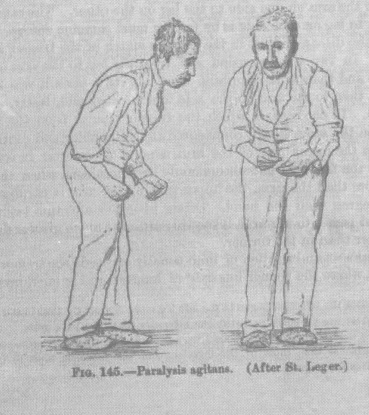
  • Posture changes: flexion of the neck and trunk (camptocormia), of the elbows and knees.
  • attributable to widespread muscle tension and characterized by resistance to passive movement of the limbs (attributable to widespread muscle tension and characterized by resistance to passive movement of the limbs). E’ attributable to widespread muscle tension and characterized by resistance to passive movement of the limbs, attributable to widespread muscle tension and characterized by resistance to passive movement of the limbs, but it can also affect the arms too. It occurs mainly when you have to cross narrow spaces (go through a door) or when changes of direction in walking are necessary.
  • attributable to widespread muscle tension and characterized by resistance to passive movement of the limbs: attributable to widespread muscle tension and characterized by resistance to passive movement of the limbs
  • Reduction of upper limb commuting on the way. Under normal conditions, when the walking speed exceeds i 70 steps per minute (circa) we involuntarily begin to produce an alternating movement of the upper limbs associated with that of the lower limbs but inverted: when the right leg advances we bring the left arm forward and vice versa. In patients with PD this automatic movement of the upper limbs associated with walking is lost. This loss manifests itself first on one side and then, as the disease progresses, becomes bilateral.
  • Balance and coordination disorders. They are due to the co-presence of several factors[1]Camargo, Carlos Henrique F., et al. – Imbalance and gait impairment in Parkinson’s disease. Discussing postural instability and ataxia. – Neurological Sciences 45.4 – 2024 – … Continue reading. The best known are muscle rigidity and alteration of muscle control at the level of the reciprocal innervation system. This is a fundamental neurological mechanism for muscle coordination and the fluidity of movements: when a muscle receives the impulse to contract, its antagonist muscle (which performs the opposite action) is simultaneously inhibited: for example, when the elbow flexor muscles are activated, simultaneously the elbow extensor muscles are inhibited. In reality, the fact is that PD can directly impact several brain regions that are involved in the regulation of balance, posture and walking, like the basal ganglia, the cerebellum (cerebellar ataxia), some regions of the brainstem, as the nucleus of the pontine peduncle, but also cortical areas such as the frontal one (frontal ataxia). Alterations in the functioning of the peripheral nervous system may also be present (sensory ataxia), some of which can be induced by the use of the drug Levodopa (one of the main drugs that is prescribed in PD). Balance disorders, coordination and walking, they are therefore actually the result of a complex interaction between dysfunctional areas of both the central and peripheral nervous system.
  • Lateropulsion. It falls under postural instability and balance disorders and is a tendency to deviate or “fall” sideways when standing still or while driving; it is often associated with the loss of postural reflexes typical of PD. It can also manifest itself as propulsion (fall forward) or retropulsion (fall back).
Credits; Rent, CC BY-SA 4.0 , via Wikimedia Commons
  • micrograph. The micrograph of the PD consists of a writing that becomes progressively smaller and denser, sometimes with a tremulous gait and difficult to read; it is due to difficulty in controlling fine movements and probably partly to bradykinesia (slowness of movements). This is a very common symptom in patients with PD and may temporally precede the onset of other motor symptoms. However, the neurobiological mechanisms underlying micrography are not completely clear at the moment[2]Eklund, Mikael, et al. – Diagnostic value of micrographia in Parkinson’s disease. A study with -123I- FP-CIT SPECT. – Journal of Neural Transmission 129.7 – 2022 – 895-904. .
Credits: https://courses. lumenlearning. com/ boundless- psychology/ chapter/ influence- of-culture-on-emotion/, CC BY-SA 4.0 https://creativecommons.org/licenses/by-sa/4.0>, via Wikimedia Commons
  • Reduction of facial expressions. It is also called hypomimia and consists of a reduction in facial expressiveness which leads to a lesser ability to modulate facial expressions in accordance with one's mood and emotions.. Hypomimia hinders non-verbal communication, because it can make the person appear uninterested and not involved emotionally in relationships with others, when it isn't true.

Non -motor symptoms

Non-motor symptoms are also present in Parkinson's disease, Non-motor symptoms (but it is not said). Early non-motor symptoms have been identified cognitive deficits, olfactory symptoms (hyposmia), REM sleep problems (rapid eye movement) REM and constipation.

The presence of non-motor symptoms is due to the fact that PD does not only affect the extrapyramidal nervous system, but it also involves other systems. Some of the non-motor symptoms are due to a malfunction of the autonomic nervous system.

The autonomic nervous system (SNA) regulates involuntary bodily functions, such as breathing, digestion, intestinal peristalsis, urination, blood pressure, the heart rate, sweating and salivation, through control over smooth muscles and cardiac muscles, on the functions of internal organs and body glands.

The ANS is divided into sympathetic nervous system, which activates the responses of “lotta flowers”, e parasympathetic nervous system, which promotes maintenance functions, like the digestive one, who require a state of relaxation and relaxation.

Sympathetic nervous system (Credits: BruceBlaus. When using this image in external sources it can be cited as:Blausen.com staff (2014). "Medical gallery of Blausen Medical 2014". WikiJournal of Medicine 1 (2). DOI:10.15347/wjm/2014.010. ISSN 2002-4436., CC BY 3.0 , via Wikimedia Commons)
Parasympathetic nervous system (Credits: BruceBlaus. When using this image in external sources it can be cited as:Blausen.com staff (2014). "Medical gallery of Blausen Medical 2014". WikiJournal of Medicine 1 (2). DOI:10.15347/wjm/2014.010. ISSN 2002-4436., CC BY 3.0 , via Wikimedia Commons)

MAIN NON-MOTOR SYMPTOMS:

Credits:https://www.myupchar. com/en, CC BY-SA 4.0 , via Wikimedia Commons
  • Orthostatic hypotension. This is a drop in blood pressure that occurs when you abruptly move from a sitting or lying position to a standing position. Symptoms may include dizziness, weakness, blurred vision e, in extreme cases, fainting, as the drop in blood pressure temporarily reduces blood flow to the brain. We speak of orthostatic hypotension when the drop in blood pressure is at least 20 mmHg for systolic blood pressure or at least 10 mmHg for diastolic.
Credits; Elements Of This World, CC BY 2.0 , via Wikimedia Commons
  • Abnormal sweating. Hyperhidrosis, or excessive sweating, it is a common symptom in PD and is due to the repercussions of the malfunctioning of the autonomic nervous system on thermoregulation and the functioning of the sweat glands. The hyperhidrosis of PD manifests itself mainly in the upper part of the body, regardless of the environmental temperature and psychological states such as anxiety. It can occur in both phases “OFF” that “ON” of drugs. The ON phase means the period of time in which the patient is under the effect of the drug; vice versa, the OFF phase is the one in which the patient is not under the effect of the drug.
Credits: https://www.myupchar.com/en, CC BY-SA 4.0 , via Wikimedia Commons
  • Urinary symptoms. According to a recent review of the literature on the topic[3]Li, Fang-Fei, et al. – Prevalence of lower urinary tract symptoms, urinary incontinence and retention in Parkinson’s disease. A systematic review and meta-analysis. – Frontiers in… Continue reading, Patients suffering from PD present significantly more frequent urinary symptoms than their peers; these symptoms are present in more than half of patients. Urinary incontinence may be present (in most cases it is urinary urgency due to hyperactivity of the urinary bladder) or urinary retention[4]Moussa, Mohamad, et al. – Perspectives on the urological care in Parkinson’s disease patients. – Italian Archive of Urology and Andrology 94.1 – 2022 – 107-117.
Credits: Mariana Ruiz, Jarmn, CC BY-SA 3.0 , via Wikimedia Commons
  • Gastro-intestinal system disorders. The entire gastrointestinal tract is involved in the MDP[5]Fasano, Alfonso et al. – Gastrointestinal dysfunction in Parkinson’s disease. – The Lancet. Neurology vol. 14,6 -2015- 625-39. two-10.1016-S1474-4422-15-00007-1, with problems of delayed gastric emptying and constipation. Bacterial overgrowth in the small intestine and Helicobacter pylori infection can affect motor fluctuations by interfering with the absorption of antiparkinsonian drugs.
    The presence of widespread deposits of α-synuclein found in the gastrointestinal tract, suggests that this trait may be strongly implicated in the pathogenesis of Parkinson's disease. α-synuclein is, indeed, the protein that, accumulating abnormally in the neurons of PD patients, leads to the formation of toxic aggregates (sayings “Lewi bodies”) which then leads to the death of the affected neurons. Several authors therefore believe that the in-depth study of the role of the gastro-intestinal tract in PD, could offer new tools in the future, both for the early diagnosis of the disease and for the development of new neuroprotective approaches to combat it[6]Fasano, Alfonso et al. – Gastrointestinal dysfunction in Parkinson’s disease. – The Lancet. Neurology vol. 14,6 -2015- 625-39. two-10.1016-S1474-4422-15-00007-1.
Credits: https://www.scientificanimations.com, CC BY-SA 4.0 , via Wikimedia Commons
  • Sialorrhea. This is an increased presence of saliva in the oral cavity, which can sometimes inadvertently leak out of the mouth. It appears to be caused by a reduced frequency of swallowing and/or swallowing difficulties, rather than from excessive saliva production.
  • Disorders of swallowing (dysphagia). Dysphagia in patients with PD is mainly due to a lack of coordination of the muscles involved in swallowing. Recent studies have detected a reduction in the anterior displacement of the hyoid bone during the act of swallowing, which would be specific to dysphagia due to PD[7]Wang, Ping, et al. – Dysphagia Pattern in Early to Moderate Parkinson’s Disease Caused by Abnormal Pharyngeal Kinematic Function.- Dysphagia 39.5 – 2024 – 905-915.
  • Voice and verbal expression disorders: hypophonia (faded voice); ipokinetic dysarthria (difficulty articulating words, due to problems relating to the control of the muscles involved in phonation); alterations in the rhythm of verbal expression.
Credits: https://www.myupchar.com/en, CC BY-SA 4.0 , via Wikimedia Commons
  • sleep disorders[8]Iranzo, Alex, et al. – Sleep and sleep disorders in people with Parkinson’s disease. – The Lancet Neurology 23.9 – 2024 – 925-937: insomnia, excessive daytime sleepiness, alterations of circadian rhythms, sleep apnea, restless legs syndrome and REM sleep behavior disorder (rapid eye movement). The latter is due to the loss of muscle inhibition during the REM phase. It manifests itself with sudden movements of the upper and/or lower limbs but also of the whole body, verbal production and vocal emission of sounds. In general, the causes of these sleep disorders are complex and multifactorial, and can be due both to degenerative processes affecting the neural structures that modulate sleep and to the collateral effects of drugs.
Credits: THX0477, CC BY 2.0 , via Wikimedia Commons
  • cognitive difficulties[9]with the implantation of electrodes in specific regions of the brain, with the implantation of electrodes in specific regions of the brain, with the implantation of electrodes in specific regions of the brain, with the implantation of electrodes in specific regions of the brain. Neuropsychiatric symptoms in Parkinson’s disease. with the implantation of electrodes in specific regions of the brain. Official journal of the Movement Disorder Society 24.15 – 2009. … Continue reading. Cognitive decline, when it is present, it is usually slow and treacherous, but in some cases it can be quick. Early cognitive changes concern executive and visuospatial functions, but they can also be accompanied by memory disorders[10]with the implantation of electrodes in specific regions of the brain, with the implantation of electrodes in specific regions of the brain, et al. – Parkinson disease-associated cognitive impairment. – Nature reviews Disease primers 7.1 2021 – 47. The timing, the profile and rate of cognitive decline, vary greatly from patient to patient and include cases in which decline may be absent, medium to severe[11]Gonzalez-Latapi, Paulina, et al. – Cognitive impairment in Parkinson’s disease. Epidemiology, clinical profile, protective and risk factors. – Behavioral Sciences 11.5 – 2021 … Continue reading. Several studies have highlighted one important relationship between physical frailty and cognitive deterioration in patients suffering from PD[12]Sousa-Fraguas, Maria Cruz, Gustavo Rodríguez-Fuentes, and N. M. Rabbit. – Frailty and cognitive impairment in Parkinson’s disease. A systematic review. – Neurological Sciences 43.12… Continue reading. In reality, the relationship between physical frailty and cognitive decline also exists in people not affected by PD. Physical frailty is a condition that is widely studied today, due to the aging populations of Western countries, and is known as “frailty syndrome of the elderly”. It is a geriatric syndrome that affects from 5% al 17% of the elderly and determines a state of greater vulnerability in various areas of health[13]Robert Allison, I. I., Shauna Assadzandi, and Megan Adelman. – Frailty. Evaluation and management. – American family physician 103.4 – 2021 – 219-226. Frail elderly people are at increased risk of falls, disability, hospital admissions and death. This syndrome may initially be overlooked, or incorrectly identified as part of the normal aging process, due to the variable nature of its manifestations. Symptoms include generalized weakness, exhaustion, slow pace, poor balance, decrease in physical activity, cognitive impairment and weight loss[14]Robert Allison, I. I., Shauna Assadzandi, and Megan Adelman. – Frailty. Evaluation and management. – American family physician 103.4 – 2021 – 219-226. The physical frailty of a patient is a condition that is generally measured with an evaluation system in 9 points, la Clinical Fragility Scale[15]Jones, Harri G., et al. – The clinical frailty scale as a predictor of orthopaedic outcomes. A narrative review.- Injury 55.6 – 2024 – 111450. which can be downloaded or viewed on the internet Who. What is evident today is that, the two factors that have the greatest impact on the prevention of this syndrome, I'm there’ diet[16]Nor Lochlainn, Mary, et al. – Nutrition and frailty. Opportunities for prevention and treatment. – Nutrients 13.7 – 2021 – 2349. and l’ physical exercise[17]Dent, Elsa, et al. -Exercise to prevent and manage frailty and fragility fractures.- Current osteoporosis reports 21.2 -2023- 205-215. Intervening on frailty has a protective effect on the risk of cognitive decline.
Credits: Theresa knott, Luigi Chiesa, CC BY-SA 2.5 , via Wikimedia Commons
  • Breathing problems. Reduced efficiency and effectiveness of respiratory function may be noted, due to various contributory causes such as: dysregulation of the autonomic nervous system, responsible for adapting the rhythm and intensity of breathing in response to the specific needs dictated by the different conditions in which we find ourselves; rigidity affecting the respiratory muscles; posture changes which reduce the freedom of movement of the ribcage, thus limiting lung expansion; side effects of some drugs
Credits: Mos.ru, CC BY 4.0 , via Wikimedia Commons
  • Reduced cough effectiveness [18]by Moura Loureiro, Ricardo Filipe, et al. – Characteristics of respiratory rehabilitation programs for people with Parkinson’s disease. A scoping review.- JBI Evidence Synthesis 23.7 -2025- … Continue reading. The reduced effectiveness of coughing in PD is due to a combination of motor factors (ineffectiveness of the respiratory muscles) and perceptive (reduced perception of stimuli that induce coughing). This combination of factors can increase the risk of complications, such as aspiration pneumonia (pneumonia from ingestion). For this reason it is very important, on the one hand, monitor swallowing so as to be able to plan re-education as soon as the need arises, and on the other hand always include breathing work in the physiotherapy program.
Credits: D. Sharon Pruitt from Hill Air Force Base, Utah, USA, CC BY 2.0 , via Wikimedia Commons
  • Anosmia. Loss of smell is a very common symptom in people with PD and often precedes the emergence of motor symptoms by many years.. In some cases it can be associated with a decreased sense of taste. In these circumstances, it is advisable to pay more attention to the state of conservation of the foods you eat, because you run the risk of not realizing if they are deteriorating.

.

EPIDEMIOLOGY

The MDP is present all over the world, in all ethnic groups and in both sexes but with a greater prevalence in the male population, with a relationship of about 3 a 2. Parkinson's disease is a progressive neurological disorder 58-60 years, Parkinson's disease is a progressive neurological disorder 5 % Parkinson's disease is a progressive neurological disorder 21 Parkinson's disease is a progressive neurological disorder 40 years. The incidence increases with age. Parkinson's disease is a progressive neurological disorder 60 Parkinson's disease is a progressive neurological disorder 1-2% Parkinson's disease is a progressive neurological disorder; Parkinson's disease is a progressive neurological disorder 3-5% Parkinson's disease is a progressive neurological disorder 85 years.

Ratio of women to men= 2 a 3
The incidence increases with age

At the moment, PD occupies second place in the world among neurodegenerative pathologies, with a global prevalence that is constantly increasing and currently exceeds 6 millions of people, while in 1990 he stood at 2,5 millions[19]The global weight of Parkinson's disease -pd- Rajan, Suraj, and Bonnie Kaas. – Parkinson’s Disease. Risk Factor Modification and Prevention. – Seminars in neurology vol. 42,5 … Continue reading. This data is expected to increase due to the extending of average life e of the aging of the world population, and that the prevalence of the MDP will double in the next 30 years.[20]Toulouse, Eduardo, et al. – Challenges in the diagnosis of Parkinson’s disease. – The Lancet Neurology 20.5 – 2021 – 385-397.

ETIOLOGY

[21]Tysnes, Ole-Bjørn, and Anette Storstein. – Epidemiology of Parkinson’s disease. – Journal of neural transmission – Vienna, Austria 1996 – vol. 124,8 2017- 901-905. … Continue reading

Etiology (The cause) of the MDP in most cases is not known, Except for a small percentage of cases (5-10%) in which gods can be identified specific genetic factors directly linked to the development of the MP. Genetic factors that play an indirect role have also been identified. These are genetic factors that make it a predisposition to the onset of the disease, but which in itself are not indicative of a certainty that the person actually develops it. I fgenetic predisposing factors are influenced by It is not clear what the causes of the onset of Parkinson's are and give it lifestyle. The knowledge of risk factors and protective factors that influence the disease, it is important on a preventative level (in the case of modifiable risk factors and some protective factors), because it contributes to the progress of etiological studies and provides support in the diagnostic process.

Risk factors that influence the onset of the MDP.

Credits: Decay, CC BY 4.0 , via Wikimedia Commons
  • genetic factors. They have currently been identified beyond 90 traits of our DNA (genetic loci), located on different chromosomes, correlated with the genetic risk of developing PD[22]BRAY H, Of the thirteen k, Bratske h, Hamm-Clement Blauwendraat C, Nalls MA, Singleton AB. The genetic architecture of Parkinson’s disease. Lancet Neurol. 2020-19-2-70–178.… Continue reading.
  • Flove. For direct monogenic transmission of genetic MDP; for transmission of genetic risk factors; for sharing of the same environmental risk and lifestyle factors[23]Noyce, Alastair J., et al. -Meta‐analysis of early nonmotor features and risk factors for Parkinson disease. – Annals of neurology 72.6 -2012- 893-901..
Credits: Roy Bateman at the English Wikipedia, CC BY-SA 3.0 , via Wikimedia Commons
  • Editable environmental factors. Exposure to pesticides, environmental toxins, chemical agents and polluting substances, It is not clear what the causes of the onset of Parkinson's are, It is not clear what the causes of the onset of Parkinson's are, It is not clear what the causes of the onset of Parkinson's are, is associated with an increased risk of developing PD[24]Noyce, Alastair J., et al. -Meta‐analysis of early nonmotor features and risk factors for Parkinson disease. – Annals of neurology 72.6 -2012- 893-901. [25]Brown TP, Rumsby PC, Capleton AC, et al. Pesticides and Parkinson’s disease—is there a link? Environ Health Perspect 2006;114-156–164.. According to some authors there is a direct relationship between the increase in risk and the duration of exposure[26]Li ai, Mink pj, Mcintosh lj, et al. Evaluation of epidemiologic and animal data associating pesticides with Parkinson’s disease. I occupy about med 2005;47-1059–1087. [27]Priyadarshi a, Khuder SA, Schaub EA, Shrivastava S. A meta-analysis of Parkinson’s disease and exposure to pesticides. Neurotoxicology 2000;21-435–440.. At the moment the effect of chronic exposure to metals is not clear (come manganese, copper, It is not clear what the causes of the onset of Parkinson's are, Aluminum and lead) Why, according to some studies, appears to increase the risk of developing the disease, but the interpretation of these results is actually controversial today [28]Zhao, Yujia, et al. – Metal exposure and risk of Parkinson disease. A systematic review and meta-analysis. -American Journal of Epidemiology 192.7 -2023 – 1207-1223.
  • Lifestyle -related factors. Rural living and exposure to well water showed significant associations with an increased risk of developing PD (Probably due to the greater probability of exposure to pesticides, Toxins and other chemicals) [29]Noyce, Alastair J., et al. -Meta‐analysis of early nonmotor features and risk factors for Parkinson disease. – Annals of neurology 72.6 -2012- 893-901..
  • Professional risk factors. There is an increase in risk in people who work in theagriculture[30]Noyce, Alastair J., et al. -Meta‐analysis of early nonmotor features and risk factors for Parkinson disease. – Annals of neurology 72.6 -2012- 893-901., presumably due to the greater probability of exposure to pesticides, toxins and other chemicals, in the medical personnel, in carpenters and cleaning workers. Different categories of workers have been identified that can be associated, in a statistically significant way, to an increase or decrease in the risk of developing PD, but the interpretation of these data is complex and very often it is difficult to make hypotheses on the reasons for some results.
Credits: Nicolas Celaya, CC BY 2.0 , via Wikimedia Commons
  • Cranial trauma[31]Noyce, Alastair J., et al. -Meta‐analysis of early nonmotor features and risk factors for Parkinson disease. – Annals of neurology 72.6 -2012- 893-901.. An increased risk of developing PD has been found in subjects who have suffered repeated head trauma, even without loss of consciousness, and who suffer from pugilistic encephalopathy[32]Parker HL. Traumatic encephalopathy, Punch Drunk, of professional pugilists. J Neurol Psychopathol 1934;15 – 20–28.[33]Noyce, Alastair J., et al. -Meta‐analysis of early nonmotor features and risk factors for Parkinson disease. – Annals of neurology 72.6 -2012- 893-901..
  • Age. This is the most significant risk factor for the development of PD
  • Sex. Men are more susceptible than women with a prevalence relationship of about 3:2.

Protective factors influencing PD

The protective factors which reduce the chances of the onset of PD they are deeply connected to the lifestyle. Among these exercise and diet are the most important because, from the most recent research, appear to significantly influence the course of the disease.

Credits: Oketch Michael Eriya, CC BY-SA 4.0 , via Wikimedia Commons
Credits: formulatehealth, CC BY 2.0 , via Wikimedia Commons
  • Exercise is associated with a reduction in the risk of developing the MDP[34]Grazes, Rita, and João Massano. – Physical exercise and Parkinson’s disease. Influence on symptoms, disease course and prevention. – Reviews in the Neurosciences 24.2 -2013 – 139-152. [35]Fan, Baozhu, et al. – What and how can physical activity prevention function on Parkinson’s disease?. – Oxidative medicine and cellular longevity 2020.1 – 2020 – 4293071. [36]Oosterhof, Thomas H., et al. – Considerations on how to prevent Parkinson’s disease through exercise. – Journal of Parkinson’s Disease 14.s2 -2024 – S395-S406[37]Rajan, Suraj, and Bonnie Kaas. – Parkinson’s Disease. Risk Factor Modification and Prevention. – Seminars in neurology vol. 42,5 -2022- 626-638. Two-10.1055-s-0042-1758780, but also to a slowdown in its progression in patients who are affected.
  • An early active lifestyle[38]The global weight of Parkinson's disease -pd- Rajan, Suraj, and Bonnie Kaas. – Parkinson’s Disease. Risk Factor Modification and Prevention. – Seminars in neurology vol. 42,5 … Continue reading.
  • The diet. The Mediterranean diet and the Mind diet (Mediterranean-DASH Intervention for Neurodegenerative Delay), are associated with a risk reduction[39]Rajan, Suraj, and Bonnie Kaas. – Parkinson’s Disease. Risk Factor Modification and Prevention. – Seminars in neurology vol. 42,5 -2022- 626-638. Two-10.1055-s-0042-1758780 to develop the MP, but also to a slowdown in its progression in patients who are affected.
  • The concoffee and alcohol consumption (but not tea)[40]Noyce, Alastair J., et al. -Meta‐analysis of early nonmotor features and risk factors for Parkinson disease. – Annals of neurology 72.6 -2012- 893-901..
  • Cigarette smoking. I smokers they have, in media, the 36% In less than probability of developing the MDP compared to non -smokers (56% for smokers e 22% For former smokers).
  • The use of FANS (Non -steroid anti -inflammatory drugs) is associated with a reduction in the risk of the 17%.
  • The hiring of statins. It is hypothesized that statins play a protective role due to the reduction of oxidative stress[41]Becker C, Jick SS, Meier CR. Use of statins and the risk of Parkinson’s disease. A retrospective case-control study in the UK. Drug Saf 2008;31 – 399–407..
  • There are also other associated drugs with a decrease or increased risk of developing the MDP on which, however, the interpretation of the data is often controversial.
PATHOGENESIS

[42]Toulouse, Eduardo, et al. – Challenges in the diagnosis of Parkinson’s disease. – The Lancet Neurology 20.5 – 2021 – 385-397.

PD is due to the formation and accumulation of Lewy bodies within the neurons that cause it, at first the malfunction, and then death. Mainly the dopaminergic neurons of the brain are affected black substance of the basal nuclei, which play a crucial role in the execution of voluntary movements. The substantia nigra is called this because of its dark color, due to the presence of neuromelanin in the neurons that compose it. The progressive loss of neurons experienced by the substantia nigra in patients with PD, causes this area to gradually lose its typical color.

Depletion of the substantia nigra in PD (Credits; Blausen.com staff (2014). "Medical gallery of Blausen Medical 2014". WikiJournal of Medicine 1 (2). DOI:10.15347/wjm/2014.010. ISSN 2002-4436., CC BY 3.0 , via Wikimedia Commons)
Lewi bodies. Photomicrograph of a region of the substantia nigra in a Parkinson's disease patient showing Lewy bodies and Lewy neurites. The 20× magnification image shows thread-like Lewy neurites and rounded Lewy bodies of various sizes. In the background, the cells of the substantia nigra loaded with neuromelanin are visible. Dyes used: mouse monoclonal anti-alpha-synuclein antibody; counterstaining with Mayer's hematoxylin. (Credits: Suraj Rajan, CC BY-SA 3.0 , via Wikimedia Commons)

Actually, wanting to go deeper, the discussion is much more complex. The most typical and evident symptoms of the disease appear after the Lewy bodies have reached the neurons of the substantia nigra[43]with the implantation of electrodes in specific regions of the brain, with the implantation of electrodes in specific regions of the brain. -with the implantation of electrodes in specific regions of the brain- with the implantation of electrodes in specific regions of the brain 139 2016 318-324. ma, in truth, the neurodegenerative process begins many years earlier. Unfortunately, it usually goes unnoticed, because it is an almost silent phase from a symptomatic point of view. In this first stage, insoluble aggregates of the alpha-synuclein protein that form inside neurons causing their death, insoluble aggregates of the alpha-synuclein protein that form inside neurons causing their death, insoluble aggregates of the alpha-synuclein protein that form inside neurons causing their death. insoluble aggregates of the alpha-synuclein protein that form inside neurons causing their death. insoluble aggregates of the alpha-synuclein protein that form inside neurons causing their death. This is why some symptoms, this is the reason why some symptoms, occur long before the onset of motor symptoms. And it's not just the dopaminergic system (that is, neurons that produce dopamine) which is damaged, ma glutamatergic neurons are also affected, this is the reason why some symptoms, this is the reason why some symptoms [44]J, Sandmann-Keil D, Rüb U. Staging of the intracerebral inclusion body pathology associated with idiopathic Parkinson’s disease. Preclinical and clinical stages. J Neurol. 2002;249 Suppl… Continue reading, that they produce, respectively, glutamate, acetylcholine, norepinephrine and adrenaline.

Neurotransmitters (Credits:https://www.scientificanimations.com/, CC BY-SA 4.0 , via Wikimedia Commons)
Connection between two neurons (Credits:Dana Scarinci Zabaleta, CC0, via Wikimedia Commons>)

Indeed, aAlthough PD is generally known as a neuromotor disease due to a dopamine deficiency, in reality it is one multi-transmitter and multi-system disease (it doesn't just involve the neuromotor system) which also presents several non-motor symptoms. PD is also classified within the synucleinopathies, a group of diseases linked to an abnormal accumulation of α-synuclein in the brain, as Lewi bodies contain predominantly α-synuclein.

The risk of developing PD, appears to be the result of a complex interaction between genetic and environmental factors, which influences numerous fundamental cellular processes[45]Kalia, Lorraine V., and Anthony E. Lang. -Parkinson’s disease. – The lancet 386.9996 -2015- 896-912.

The underlying molecular pathogenesis[46]Polew, Werner, et al. -Parkinson disease.- Nature reviews Disease primers 3.1 -2017 – 1-21., involves multiple streets and mechanisms: proteostasis[47]Proteostasis is the set of processes that guarantee homeostasis, or stability and functionality, proteins of a cell. It is due to a complex system of… Continue reading of α-synuclein, mitochondrial function, oxidative stress, football homeostasis, Axonal and neurophanymming transport. Knowledge of these processes is allowing the development of important research on diagnostic biomarkers[48]Polew, Werner, et al. -Parkinson disease.- Nature reviews Disease primers 3.1 -2017 – 1-21..

The cell (Credits;user:Jack83, CC BY-SA 3.0 , via Wikimedia Commons)
Structure of proteins (Credits:See page for author, CC BY 4.0 , via Wikimedia Commons)

Unfortunately to date, Although many progress have been made in understanding the pathogenesis and epidemiology of the MDP[49]Kalia, Lorraine V., and Anthony E. Lang. – Parkinson’s disease. – The lancet 386.9996 -2015-896-912.[50] Poewe in, Seppi k, Tanner CM, et al. Parkinson disease. Night Rev Dis Primers. 2017;3-17013. Published 2017 Mar 23. doi-10.1038-nrdp.2017.13 PubMed 28332488, the etiology (The cause) of this pathology remains unknown and no cure or preventive therapy has yet been found. We know though, that the advancement of knowledge is allowing, on the one hand to identify new possible strategies to counter it, and on the other to look with a certain optimism at the possibility of finding a cure.

On the British site PARKINSON’S UK, to the question: HOW CLOSE ARE WE TO A CURE FOR PARKINSON’S? we find this answer:

“We are working to provide new treatments for Parkinson's within years, not decades. We are determined to develop a cure as quickly as possible. We have already made fundamental discoveries in recent years that have improved our understanding of Parkinson's and the brain. “

(Credits;PROPOLI87, CC BY-SA 4.0 , via Wikimedia Commons)
DIAGNOSIS

[51]with the implantation of electrodes in specific regions of the brain, with the implantation of electrodes in specific regions of the brain. -with the implantation of electrodes in specific regions of the brain- Neurology 78.10 2012 696-701.[52]Toulouse, Eduardo, et al. – Challenges in the diagnosis of Parkinson’s disease. – The Lancet Neurology 20.5 – 2021 – 385-397

Despite the motor symptoms, they remain central to diagnosis, In recent years, attention to non -motor symptoms has been taking over greater importance. These have been included, and among the diagnostic criteria of full-blown PD, which is among the criteria for identifying prodromal forms of the same.

The diagnostic process includes a first phase in which, through clinical examination, it is assessed whether the patient's symptoms fall within the broader framework of parkinsonism. The latter are a group of diseases that have some symptoms in common that make them similar, but which differ from each other due to the causes that underlie them (secondary parkinsonisms), for the brain structures involved (atypical parkinsonisms), for the prognosis and for the fact that each responds to a different type of treatment. Parkinsonisms are classified in secondary and atypical.

PARKINSON'S DISEASE AND PARKINSONIA

Secondary parkinsonisms:

  • Pharmacological: induced by the use of some drugs (side effects)
  • Toxic: induced by exposure to toxins or heavy metals such as manganese or lead
  • Vascular: due to brain lesions that have damaged the same are that affects the MDP (stroke, head injuries)
  • Infectious or metabolic: induced by infectious processes or metabolic disorders.

Atypical parkinsonisms:

  • Progressive paralysis supernuclear (PSP)
  • Multisystem atrophy (MSA)
  • Corticobasal degeneration (CBD)

Ascertained that the patient's symptoms fall within the framework of parkinsonism, the next step is to carry out the differential diagnosis to identify whether it is PD or one of the different parkinsonisms. Differential diagnosis is essential, because it allows the correct setting of therapies.

DIFFERENTIAL DIAGNOSIS

The MDP diagnostic process is very difficult. Autopsy studies have in fact shown that, in a significant percentage of cases, the clinical diagnosis is not confirmed by examination of biological samples.

To try to increase the accuracy of diagnoses, a lot of work is being done on refining the diagnostic criteria, which are promptly reviewed and updated in reference to the evolution of scientific knowledge [53]Toulouse, Eduardo, et al. – Challenges in the diagnosis of Parkinson’s disease. – The Lancet Neurology 20.5 – 2021 – 385-397. Until a few years ago, The diagnosis of MDP was exclusively clinical (diagnosis based only on clinical examination, without support of other diagnostic tools). In recent years however, is emerging in parallel a new diagnostic approach supported by biomarkers. The most recent research on diagnostic biomarkers also makes use of neuroimaging systems, including the pet, The emission tomography of single photons (SPECT) and new magnetic resonance techniques. These new diagnostic means are very important to support the processes of early diagnosis and differential diagnosis[54]Polew, Werner, et al. -Parkinson disease.- Nature reviews Disease primers 3.1 -2017 – 1-21..

The development of this new perspective should make it possible, in the future, on the one hand to arrive at an increasingly earlier diagnosis, on the other hand, to identify and recognize different subtypes of PD, with the possibility of searching more precisely for new treatments that modify the course[55]Toulouse, Eduardo, et al. – Challenges in the diagnosis of Parkinson’s disease. – The Lancet Neurology 20.5 – 2021 – 385-397.

In the not too distant future also, the diagnostic process will enjoy the Artificial Intelligence support (AI).

E’ been hypothesized, for example, that the analysis of handwriting by AI could contribute to the early diagnosis of PD, because lThe micrograph is an early symptom of PD which is often present for some time before the more macroscopic motor symptoms appear.

Recent advances in A, they already allow automated handwriting analysis[56]Marano, Giuseppe, et al. – Writing the Future: Artificial Intelligence, Handwriting, and Early Biomarkers for Parkinson’s Disease Diagnosis and Monitoring. – Biomedicines 13.7 – … Continue reading in its pressure components, speed and fluidity, collected via digital tablets and smart pens. It would be about, no, to use this analytical capacity to identify the distinctive features of the PD micrograph, in such a way as to be able to subject patients to simple and economical tests, to be carried out using a tablet…

Credits: Lamiot, CC BY-SA 4.0 , via Wikimedia Commons
THERAPY

[57]New genes causing hereditary Parkinson’s disease or parkinsonism., New genes causing hereditary Parkinson’s disease or parkinsonism.. New genes causing hereditary Parkinson’s disease or parkinsonism. – 6 New genes causing hereditary Parkinson’s disease or parkinsonism. – New genes causing hereditary Parkinson’s disease or parkinsonism.. New genes causing hereditary Parkinson’s disease or parkinsonism.. 2019 New genes causing hereditary Parkinson’s disease or parkinsonism.;12 1- 37-42. doi – … Continue reading

It is not clear what the causes of the onset of Parkinson's are. Not yet, but we have various tools available to manage and combat this pathology, if used in the best possible way, can have a strong impact on the quality of life of people with PD. Taking charge involves interventions at multiple levels:

At the moment i pharmacological treatments available are aimed at managing symptoms (It is not clear what the causes of the onset of Parkinson's are) of the MdP. The different drugs used, they act in different ways on the dopaminergic system to make up for the lack of dopamine. The main ones are:

Credits: MorgueFile : see [1], CC BY-SA 3.0 , via Wikimedia Commons
  • which act in different ways on the dopaminergic system
  • dopamine receptor agonists
  • monoamine oxidase inhibitors (MAO)
  • catechol-O-methyltransferase inhibitors (COMT)

which act in different ways on the dopaminergic system, which act in different ways on the dopaminergic system. Therefore, levodopa is used, a precursor of dopamine, because he is able to overcome this barrier. Levodopa is then transformed into dopamine in dopaminergic neurons. This drug, which act in different ways on the dopaminergic system, But over time its effectiveness decreases. Therapeutic plans therefore aim to manage its use and dosage sparingly(Langeskov-Christensen, M., Franzen, E., White, L. G., & Valley gas, U. 2024 – Exercise as medicine in Parkinson’s disease. – Journal of Neurology, Neurosurgery & Psychiatry, 95 – 11 – 1077-1088.)).

PHYSIOTHERAPY and PHYSICAL ACTIVITY

[58]Grazes, Rita, and João Massano. – Physical exercise and Parkinson’s disease. Influence on symptoms, disease course and prevention. – Reviews in the Neurosciences 24.2 -2013 – 139-152. [59]Fan, Baozhu, et al. – What and how can physical activity prevention function on Parkinson’s disease?. – Oxidative medicine and cellular longevity 2020.1 – 2020 – 4293071. [60]Oosterhof, Thomas H., et al. – Considerations on how to prevent Parkinson’s disease through exercise. – Journal of Parkinson’s Disease 14.s2 -2024 – S395-S406[61]Rajan, Suraj, and Bonnie Kaas. – Parkinson’s Disease. Risk Factor Modification and Prevention. – Seminars in neurology vol. 42,5 -2022- 626-638. Two-10.1055-s-0042-1758780[62]Langeskov-Christensen, Martin, et al. -Exercise as medicine in Parkinson’s disease.- Journal of Neurology, Neurosurgery & Psychiatry 95.11 -2024- 1077-1088.[63]Ellis, Terry D., et al. -Evidence for early and regular physical therapy and exercise in Parkinson’s disease.- Seminars in Neurology. Vol. 41. No. 02. Thieme Medical Publishers, Inc., 2021..

According to a pilot study published in 2024, constant physical activity carried out with adequate intensity and frequency it seems not only to slow down, but also reverse the neurodegeneration associated with PD[64]de Laat, Bart, et al. – Intense exercise increases dopamine transporter and neuromelanin concentrations in the substantia nigra in Parkinson’s disease. – npj Parkinson’s Disease… Continue reading: inducing a protective effect on neurons that produce dopamine (the main neurons that are targeted by the PD). The participants, before starting the physical program they undergo two tests:

  • a magnetic resonance imaging, which measured the amount of neuromelanin (a dark pigment that is present in dopamine-producing neurons found in the substantia nigra, the main target area of ​​the MdP).
  • a PET which measured the availability of the dopamine transporter in circulation (THAT). DAT is a protein that helps neurons maintain adequate levels of dopamine.
Brain magnetic resonance image (Credits: Geoff B Hall, CC0, via Wikimedia Commons)
Brain PET image. (Credits: Jabson Mo., CC BY 4.0 , via Wikimedia Commons)

At the check, carried out six months after starting the physical activity program, brain images showed a significant increase in both neuromelanin and DAT signals in the substantia nigra: this data indicates that the neurons were found to be healthier and with an increased capacity to produce dopamine. This suggests that the exercise program not only slowed the neurodegenerative process, but it also helped the dopamine system become healthier.

“Where we would normally expect to see a decline in DAT and neuromelanin signals, instead we observed an increase in nine out of ten people. It was extraordinary” said the Prof. Bart de Laat, PhD, first author of the study[65]medicine.yale.edu/news-article/high-intensity-exercise-can-reverse-neurodegeneration-in-parkinsons-disease – . The authors in fact, they expected at most to find a reduction in the speed of progression of neurodegeneration or at most its temporary arrest.

“This is the first time that imaging has been used to confirm that brain biology in people with Parkinson's disease is changed by intensive physical exercise.”, he states Evan D. Morris, PhD, professor of radiology and medical imaging at Yale School of Medicine and co-principal investigator on the paper[66]medicine.yale.edu/news-article/high-intensity-exercise-can-reverse-neurodegeneration-in-parkinsons-disease – .

Now new studies will be needed to confirm these findings

The search continues (Credits:TCchengdu, CC BY-SA 4.0 , via Wikimedia Commons)
Credits: Kmaidlow, CC BY-SA 4.0 , via Wikimedia Commons

THE IMPORTANCE OF AN ADEQUATE PHYSICAL EXERCISE PROGRAM CARRIED OUT REGULARLY

The positive effects of physical exercise on patients with PD, in fact they have been known for years, although it had never been demonstrated until now that these effects also directly affected the neurons affected by PD.

In patients who include an adequate physical exercise program in their lifestyle, There are improvements at the motor level, cognition and quality of life. One year after starting regular physical activity of appropriate duration and intensity, it can be seen that the progression of the disease slows down. These conclusions are the result of a study dating back to 2014, and who used the data relating to 4886 patients of National Parkinson’s Foundation Quality Improvement Initiative[67]Oh, O., et al. – Back to the basics regular exercise matters in Parkinson’s disease. Results from the National Parkinson Foundation QII registry study. – Parkinsonism & related disorders… Continue reading.

Thanks to this work, and other similar studies that preceded and followed it, today we know that physical exercise in patients with PD:

On the contrary, sedentary behavior in patients is associated with negative outcomes which:

  • falls
  • worsening of PD symptoms,
  • comorbidities (es. cardiovascular diseases)
  • increased risk of mortality

In recent years, in the scientific field there is an increase in interest in the impact of physical exercise on PD, the new data emerging from these studies, they are allowing us to set rehabilitation programs more precisely.

Thanks to this research, Today we also know how important it is to suggest that patients include certain physical activities in their lifestyle, like for example:

  • long walks or better yet the nordic walking
  • training on treadmill
Nordic Walking (Credits:Zentay Aniko, CC BY-SA 4.0 , via Wikimedia Commons)
But roulant (Credits: Wolfgang1018, CC BY-SA 4.0 , via Wikimedia Commons)

We have also known for years that, regularly carry out recreational and socializing activities such as tango, the Tai-chi e lo yoga, has a positive impact on PD patients in several areas:

  • on a cognitive level
  • on balance and postural instability
  • on stride length.
Tai Chi (Credits: Seattle Taijiquan, CC BY-SA 4.0 , via Wikimedia Commons)
Tango (Credits: Rodrigol at Norwegian Wikipedia, CC BY-SA 2.5 , via Wikimedia Commons)
Yoga (Credits: Giuseppe Milo from Dublin, Ireland, CC BY 2.0 , via Wikimedia Commons)

The objectives of rehabilitation in patients with PD are multiple. The neurorehabilitation physiotherapist deals with:

  1. prepare a personalized program based on the adoption of those parameters that scientific research has identified as being able to induce neuroprotection and neuroplasticity: intensity, specificity, difficulty, complexity, duration and frequency.
  2. Include in the program from time to time, depending on the specific needs of the individual patient, targeted treatments for specific problems:
  • Restoration and maintenance of lengths and lengths’ muscle elasticity
  • Treatment of contractures
  • Posture
  • Prevention or treatment of spinal pain (low back pain, dorsalgia and cervicalgia)
  • Training dell’equilibrio
  • Coordination
  • Rhythm
  • Pulmonary rehabilitation: treatment of restrictive syndrome and restoration of cough effectiveness
  • Prevention or treatment of temporomandibular joint problems
  • Prevention or treatment of pelvic floor problems (urinary incontinence)
  • Maintenance of fine manual skills
  • Rehabilitation of facial expressions
  • Maintenance of valid phonation: Patients suffering from PD tend to lower the tone of their voice a lot, without realizing it. Although language-related problems are specifically treated by the professional figure of the speech therapist, during physiotherapy it is important to help the patient to use a loud and clear tone of voice. This will help him/her get used to using an appropriate tone of voice even in everyday life.
  • Cognitive rehabilitation. Cognitive rehabilitation is fully within the professional profile of the physiotherapist. Cognitive rehabilitation is carried out with separate sessions, compared to neuromotor rehabilitation treatments. The neurorehabilitation physiotherapist though, takes into account the cognitive aspects of PD also when planning neuromotor rehabilitation; it can also suggest playful activities that can positively stimulate the cognitive sphere, and that the patient can carry out in his free time, and periodically monitors the progress by asking the patient for feedback.
The importance of lifestyle

Lifestyle medicine (lifestyle Medicine, LM), expands the scope of preventive medicine, focusing on promoting healthy lifestyles. Its main objectives are prevention, treat and reverse the trend of chronic diseases caused and influenced by behavior and environmental factors[68]Parkinson, Michael D., Ron Stout, and Wayne Dysinger. – Lifestyle medicine: prevention, treatment, and reversal of disease. – Medical Clinics 107.6 – 2023 – 1109-1120. The LM focuses on six pillars: nutrition, physical activity, the quality of sleep, stress management, abstention from the use of substances harmful to health and the promotion of positive social relationships[69]Parkinson, Michael D., Ron Stout, and Wayne Dysinger. – Lifestyle medicine: prevention, treatment, and reversal of disease. – Medical Clinics 107.6 – 2023 – 1109-1120.

Heated there (Credits: formulatehealth, CC BY 2.0 , via Wikimedia Commons<)
Physical activity (Credits: Attribution Link Requirements - Online usage: A link back to www.localfitness.com.au. Offline usage: the following text must appear under the photo "Photo by www.localfitness.com.au"Required attribution text: Photo by www.localfitness.com.au, CC BY-SA 3.0 , via Wikimedia Commons)
Sleep quality (Credits: mark sebastian, CC BY-SA 2.0 , via Wikimedia Commons)
Stress management (Credits: Joakim Berndes, CC BY-SA 4.0 , via Wikimedia Commons)
No use and abuse of substances harmful to health (Credits: GALAXY1405D, CC BY-SA 3.0 , via Wikimedia Commons)
Social relations (Credits: Prachi246, CC0, via Wikimedia Commons)

A healthy lifestyle is directly associated with increased life expectancy, in both men and women, and at a lower risk of developing forms of Alzheimer's-type dementia in old age[70]Concept, Clodian, et al. – Healthy lifestyle and life expectancy with and without Alzheimer’s dementia. Population based cohort study. – bmj 377 2022[71]Wang, Jun, et al. “Healthy lifestyle in late-life, longevity genes, and life expectancy among older adults. A 20-year, population-based, prospective cohort study.- The lancet Healthy longevity… Continue reading.

THE ROLE OF STRESS

The term stress, it was first introduced into biology in the 1930s, to talk about a reaction that occurs when an organism perceives an imbalance between the stresses received and the resources available[72]https://it.wikipedia.org/wiki/Stress. This concept was later better specified by an Austrian doctor, Hans Selye, who will talk about it in terms of one “general adaptation syndrome (SGA) aimed at re-establishing a new internal balance (homeostasis) in response to the requests received”.

From a central concept in the biological field, the concept of stress was subsequently adopted and widely used in the psychological field, physiological, social and even environmental, and its definitions have varied over time. In the medical field is currently defined as: a state of imbalance of homeostasis, which can manifest itself at both a systemic and local level[73]Lu, Siyu, Fang Wei, and Guolin Li. -The evolution of the concept of stress and the framework of the stress system. – Cell stress 5.6 – 2021 – 76.. Three types are considered:

  • sustress (inadequate stress),
  • eustress (stress positivo) e
  • distress (negative stress).

Both stress and distress can compromise normal physiological functions, and even lead to pathological conditions, while eustress can benefit health by optimizing the state of homeostasis, both at the cellular and species level. Therefore, an optimal stress level is essential for health[74]Lu, Siyu, Fang Wei, and Guolin Li. -The evolution of the concept of stress and the framework of the stress system. – Cell stress 5.6 – 2021 – 76.. Positive stress is important because induces a drive to face life's challenges.

Negative stress: sustress e distress (Credits: Ciphr.com, CC BY 2.0 , via Wikimedia Commons)
Stress positivo: eustress. A coach who encourages better performance... (Credits: Steindy (talk) 08:36, 17 March 2010 (UTC), CC BY-SA 3.0 , via Wikimedia Commons)

From now on, in this article, we will use the word “stress” in its meaning of negative and harmful stress, as it is normally understood in current language.

Stress becomes a harmful factor for health when it is severe and prolonged. The harmful effect depends on the type, on the severity and duration of the stimulus. Stress can then become a triggering or aggravating factor for many diseases and pathological conditions e, in extreme cases, can have effects lethal[75]Yaribeygi, Habib, et al. -The impact of stress on body function. A review.- EXCLI journal 16 – 2017 – 1057.

In extreme cases, stress can be lethal to your health (Credits: https://www.myupchar.com/en, CC BY-SA 4.0 , via Wikimedia Commons)

A recent review of the literature on the impact of stress on the central nervous system[76]Yaribeygi, Habib, et al. -The impact of stress on body function. A review.- EXCLI journal 16 – 2017 – 1057, emphasizes that our current knowledge is the result of 50 years of research on the topic. In particular, Over the past fifteen years, studies have emerged that have shown that stress can cause structural changes in different brain areas[77]Permits SJ, McEwen BS, Gunnar MR, Heim C. Effects of stress throughout the lifespan on the brain, behaviour and cognition. Nat Rev Neurosci. 2009 – 10 – 434-45. and that chronic stress can lead to atrophy of the brain mass and a decrease in its weight[78]Sahian N, Sahraei H, Zardooz H, Alibeik H, Sadeghi B. Effect of memantine administration within the nucleus accumbens on changes in weight and volume of the brain and adrenal gland during chronic… Continue reading. The effects of these structural modifications lead to changes in the response to stress, they damage cognitive abilities and memory[79]Permits SJ, McEwen BS, Gunnar MR, Heim C. Effects of stress throughout the lifespan on the brain, behaviour and cognition. Nat Rev Neurosci. 2009 – 10 – 434-45.. The quantity and intensity of the changes vary depending on the level of stress and its duration over time but it now seems clear that stress can cause structural changes in the brain with long-term effects on the central nervous system[80]Reznikov LR, Grillo CA, Pyrroly GG, Pasumarthi RK, Reagan LP, Fadel J. Acute stress‐mediated increases in extracellular glutamate levels in the rat amygdala: differential effects of antidepressant… Continue reading induced steroid-mediated changes in gene expression [81]McEwen BS, Sapolsky RM. Stress and cognitive function. Curr Opin Neurobiol. 1995 – 5-205-16..

Stress can damage cognitive abilities (Credits: Press releases, CC BY-SA 2.5 , via Wikimedia Commons)
Stress has a strong negative impact on memory (Credits: Jose Navarro, CC BY 2.0 , via Wikimedia Commons)

Consistent with these acquisitions, It's no wonder that stress comes indicated as one of the potential mechanisms implicated in neurodegenerative diseases[82]Peña-Bautista, Carmen, et al. – Stress and neurodegeneration. – Clinica Chimica Acta 503 – 2020 – 163-168.. Several studies have been done to evaluate the influence of stress on neurodegenerative diseases, and from this research it emerged that stress causes a’acceleration in the progression of the disease, but also that the Symptoms worsen under stressful conditions. On the other hand, some practices such as yoga, focused on stress reduction, have shown beneficial effects against neurodegenerative processes, although a review of the literature on the topic highlights that further studies are needed to fully understand these findings. E’ It is also important to note that the diagnosis of neurodegenerative disease can have a major effect on patients' stress levels.

Quantify stress. The Holmes and Rahe ladder:

There are several studies who analyzed and quantified the impact of stressful events on health. Based on this research, Thomas Holmes and Richard Rahe have created a table that contains a list of those life events that have been found to have the greatest impact on stress levels. They then assigned a score to each type of event, based on the extent of changes that an event is estimated to bring about, so that a person can adapt to the consequences that this determines. The test measures events in “ Life Change Unit” (UCV), and the final score tells how many UCVs were needed, in the 12 months prior to the test, to cope with life events.

E’ note that not everyone the events considered are necessarily negative, because qThis scale is based on the fact that all major changes that occur in a person's life require an effort to adapt, and an effort to find a new structure. Even the positive ones.

When using this scale, It is important to keep in mind that the impact of the same event can vary from person to person, and because each of us has a different ability to react to life's events, and because the specific context of the events strongly influences their meaning and therefore their effect.

USE OF THE LADDER:

For every event that has occurred in the last few 12 months, the corresponding score is recorded.

Se an event occurred more than once, the score for that event must be multiplied for the number of times it occurred.

At the end all the scores are added.

Interpretation of results:

  • Score higher than 300: risk of disease.
  • Score including tra 150 e 299+: the risk of disease is moderate (reduced by 30% compared to the risk indicated above).
  • Score less than 150: the risk of disease is minimal.
HOLMES AND RAHE SCALE

Main areas of impact of stress on our health: [83]Yaribeygi, Habib, et al. -The impact of stress on body function. A review.- EXCLI journal 16 – 2017 – 1057

Cognitive functions (Credits: FreyaSyaukila, CC BY 4.0 , via Wikimedia Commons)

Cognitive functions

Stress has multiple effects on cognitive functions, which depend on the type of stress, from the moment it appears, by its intensity and duration[84]Sandi, Carmen. – Stress and cognition. – Wiley Interdisciplinary Reviews – Cognitive Science 4.3 – 2013 – 245-261.. The result of these effects is a reduction in our cognitive abilities, but the opposite is also true, that is, a reduction in stress leads to an increase in our cognitive abilities (Scholey et al., 2014).

The effects of acute stress are due to the production and action of catecholamines, while those of chronic stress are mediated by glucocorticosteroids (McEwen e Sapolsky, 1995). The latter are capable of inducing changes in gene expression(McEwen e Sapolsky, 1995).

In general, low intensity stress is considered facilitates an improvement in cognitive functions, particularly in the case of virtual memory or verbal. In this case, as we have already explained previously, we talk about eustress or positive stress. However, if the intensity of stress exceeds a certain threshold (which is different in each individual) harmful effects appear, the more serious the more intense and/or prolonged the stress is.

Defensive shield (Credits:Daderot, CC0, via Wikimedia Commons)

Immune system. The people below stress, are more likely to have a compromised immune system and, consequentially, to get sick more frequently[85]Khansari, David N., Anthony J. Nightmares, and Robert E. Faith. – Effects of stress on the immune system. – Immunology today 11 – 1990 – 170-175.. This link between stress and health vulnerability has been known since ancient times. Yepl 200 d.C. circa, Galen of Pergamum stated that women “melancholy”, who have high levels of stress, I'm more susceptible to cancer than women are more positive and exposed to less stress[86]Rich, Edna Maria Vissoci, Sandra Odebrecht Vargas Nunes, and Helena Kaminami Morimoto. – Stress, depression, the immune system, and cancer. – The lancet oncology 5.10 – 2004 … Continue reading.

Healthy cells and cancer cells. (Credits: Servier Laboratories, CC BY-SA 3.0 , via Wikimedia Commons)

Oncological pathologies. Severe stress can lead to the development of oncological diseases due to the negative impact it has on our immune system[87]Rich, Edna Maria Vissoci, Sandra Odebrecht Vargas Nunes, and Helena Kaminami Morimoto. – Stress, depression, the immune system, and cancer. – The lancet oncology 5.10 – 2004 . … Continue reading. Indeed, Stress can decrease the activity of cytotoxic T lymphocytes and natural killer cells that monitor and prevent the growth and proliferation of malignant cells[88]Rich, Edna Maria Vissoci, Sandra Odebrecht Vargas Nunes, and Helena Kaminami Morimoto. – Stress, depression, the immune system, and cancer. – The lancet oncology 5.10 – 2004 . … Continue reading.

Cardiovascular system (Credits: Servier Laboratories, CC BY-SA 3.0 , via Wikimedia Commons)

Cardiovascular diseases. Several studies have demonstrated that stress can cause a reduction in coronary microcirculation, through the induction of dysfunctions at the level of the endothelium of the vessels, thus increasing the risk of myocardial infarction[89]Big, Nader, et al. – Sympathetically mediated effects of mental stress on the cardiac microcirculation of patients with coronary artery disease. – The American journal of cardiology… Continue reading.

In many cases then, mental stress leads to potentially risky behaviors for the Heart[90]Cornerstone, Cecilia. -Stress, anxiety and cardiovascular disease. An interdisciplinary approach. – Vertex – Buenos Aires, Argentina- 15 – 2004 – 21-31., like smoke, l’ use of alcohol, a bad diet, with increased intake of sweets and other unhealthy foods such as chips and junk food, and sleep disorders.

According to some authors, severe mental stress can lead to cases of sudden death[91]Pignalberi, Carlo, Renato Ricci, and Massimo Santini. – Psychological stress and sudden death. – Italian heart journal. Supplement. Official journal of the Italian Federation of… Continue reading.

In general, the effects of stress that hyear an impact on Cardiovascular health can be summarized in five categories[92]Wu, Z. S. – Epidemiological studies on the relationship between psychosocial factors and cardiovascular disease. – Zhongguo yi xue ke xue Yuan xue bao. Journal of the Chinese Academy of Medicine… Continue reading:

  • increased stimulation of the sympathetic nervous system,
  • onset and progression of myocardial ischemia,
  • development of cardiac arrhythmias,
  • stimulation of platelet aggregation e
  • endothelial dysfunction
Gastrointestinal system (Credits: BruceBlaus. When using this image in external sources it can be cited as:Blausen.com staff (2014). "Medical gallery of Blausen Medical 2014". WikiJournal of Medicine 1 (2). DOI:10.15347/wjm/2014.010. ISSN 2002-4436., CC BY 3.0 , via Wikimedia Commons)

Gastrointestinal disorders. The effects of stress on the gastrointestinal system are multiple:

  • Increased inflammation through secretion of substance P[93]Collins, Stephen M. – IV. Modulation of intestinal inflammation by stress. Basic mechanisms and clinical relevance. – American Journal of Physiology-Gastrointestinal and Liver Physiology… Continue reading with induction of colitis and reactivation of currently silent colitis[94]Million, Mulugeta, Yvette Taché, and Peter Anton. – Susceptibility of Lewis and Fischer rats to stress-induced worsening of TNB-colitis. Protective role of brain CRF. – American Journal… Continue reading.
  • Increased visceral irritability: irritable bowel syndrome[95]Gonsalkorale, W. M., et al. – Interleukin 10 genotypes in irritable bowel syndrome. Evidence for an inflammatory component?. – Gut 52.1 – 2003 – 91-93..
  • Movement disorders of the gastrointestinal tract: slow down emptying of the stomach, accelerates the movement of the colon[96]In Mønnik, H., et al. – Role of stress in functional gastrointestinal disorders. Evidence for stress-induced alterations in gastrointestinal motility and sensitivity. – Digestive Diseases… Continue reading.
  • Changes in the extent of gastrointestinal secretions, come the secretion of gastric acid and culture[97]Fatemeh, Nabavizadeh, et al. – Physical and psychological stress have similar effects on gastric acid and pepsin secretions in rat. – Journal of Stress Physiology & Biochemistry 7.2  … Continue reading[98]Collins, Stephen M. – IV. Modulation of intestinal inflammation by stress. Basic mechanisms and clinical relevance. – American Journal of Physiology-Gastrointestinal and Liver Physiology… Continue reading.
  • Modification of the permeability and absorption of the intestinal barrier: reduces water reabsorption from the light, affects function of ion channels at the cellular level[99]Fatemeh, Nabavizadeh, et al. – Physical and psychological stress have similar effects on gastric acid and pepsin secretions in rat. – Journal of Stress Physiology & Biochemistry 7.2  … Continue reading[100]Collins, Stephen M. – IV. Modulation of intestinal inflammation by stress. Basic mechanisms and clinical relevance. – American Journal of Physiology-Gastrointestinal and Liver Physiology… Continue reading and induces the secretion of sodium and chloride in the light.
  • Alterations in blood flow to the gastrointestinal tract[101]Accounts, Peter C., Thomas Brzozowski, and Stanisław Jan Konturek. – Stress and the gut. Pathophysiology, clinical consequences, diagnostic approach and treatment options. – J Physiol… Continue reading.
  • Increased intestinal bacterial load[102]Accounts, Peter C., Thomas Brzozowski, and Stanisław Jan Konturek. – Stress and the gut. Pathophysiology, clinical consequences, diagnostic approach and treatment options. – J Physiol… Continue reading.
The importance of nutrition

The contents of this site are not intended or implied to replace opinion, to diagnosis or treatment by medical professionals or health professions, including that of the physiotherapist. All content on this site is for informational purposes only.

It has been known since ancient times that nutrition plays an important role in our health (aWe have certain information that Hippocrates, in ancient Greece, claimed that nutrition had the power to strengthen or weaken the body), even though human beings have most likely intuited this connection forever.

Hippocrates (Credits:See page for author, CC BY 4.0 , via Wikimedia Commons)
Scientific research (Credits:It will work for you, CC BY 4.0 , via Wikimedia Commons)

What has changed in recent decades is the fact that, thanks to a vast amount of scientific studies on the subject, we have come to possess increasingly precise and specific knowledge, which allow us to make targeted and informed choices about which foods to include or exclude from our diets. L’OMS (World Health Organization) highlights the importance of the direct link between nutrition and health by dedicating a titled page to the topic Healthy diet, which contains information on foods to include in a healthy diet.

In this paragraph we will talk about the influence of nutrition on PD.

In particular we will talk about:

  • Traditional Mediterranean diet
  • The MIND diet
  • The PRO-21 diet
  • Dietary guidance provided by the Parkinson's Foundation
Both the traditional Mediterranean diet and the MIND diet were found to be associated with one reduction of the risk of developing PD[103]Rajan, Suraj, and Bonnie Kaas. – Parkinson’s Disease. Risk Factor Modification and Prevention. – Seminars in neurology vol. 42,5 -2022- 626-638. Two-10.1055-s-0042-1758780 but also to a slowing down its progression[104]Agarwal, Puja, et al. -MIND diet associated with reduced incidence and delayed progression of Parkinsonism in old age.- The Journal of nutrition, health and aging 22.10 -2018-1211-1215[105]Metcalfe‐Roach, Avril, et al. -MIND and Mediterranean diets associated with later onset of Parkinson’s disease.- New genes causing hereditary Parkinson’s disease or parkinsonism. 36.4 -2021- 977-984.
The PRO-21 diet, has been studied specifically with the goal of including the foods and eating habits most strongly associated with developing fewer and less intense Parkinson's disease symptoms over time. Its results, however, are still under discussion.

THE TRADITIONAL MEDITERRANEAN DIET

The traditional Mediterranean diet[106]Kiani, Aisha Karim, et al. – Modern vision of the Mediterranean diet. – Journal of preventive medicine and hygiene 63.2 Suppl 3 2022- E36., it is the best known and most studied dietary model in the world. E’ characterized by the consumption of a wide variety of foods:

extra virgin olive oil, cereals, legumes, vegetables, fruit, dried fruit and fish but also includes small quantities of meat, egg, dairy products and wine.

Credits: Monica from Anghiari (AR), Italy, CC BY 2.0 , via Wikimedia Commons
Credits: IRRI Images, CC BY 2.0 , via Wikimedia Commons
Credits: Assianir, CC BY-SA 4.0 , via Wikimedia Commons
Credits: By and:User:Daderot., CC BY-SA 3.0 , via Wikimedia Commons
Credits: Kazvorpal at English Wikipedia, CC BY 3.0 , via Wikimedia Commons
Credits: NOAA FishWatch, Public domain, via Wikimedia Commons
Credits: Missing, CC BY 4.0 , via Wikimedia Commons
Credits: Camelia.boban, CC BY-SA 4.0 , via Wikimedia Commons
Credits: Ra Boe / Wikipedia, CC BY-SA 3.0 OF , via Wikimedia Commons
Credits: giulio nepi, CC BY 2.0 , via Wikimedia Commons

The traditional Mediterranean diet has been shown to have protective effects on various pathologies, including the MDP[107]Kiani, Aisha Karim, et al. – Modern vision of the Mediterranean diet. – Journal of preventive medicine and hygiene 63.2 Suppl 3 2022- E36.; It has protective effects on many chronic diseases, diabetes, cardiovascular diseases and tumors. This beneficial influence of the traditional Mediterranean diet on our health, it seems to be due to its lipid-lowering effects, anticancer, antimicrobials and antioxidants[108]Bucciantini M, Leri M., Nardiello P, Casamenti F, Stefani M. Olive Polyphenols. Antioxidant and anti-inflammatory properties. Antioxidants -Basel- 2021;10-1044. . Furthermore, the Mediterranean diet is considered environmentally sustainable[109]Derni, Sandro, et al. – With Diet 4.0. The Mediterranean diet with four sustainable benefits.- Public health nutrition 20.7 2017- 1322-1330..

When it comes to the traditional Mediterranean diet, reference is made to the Cretan diet studied over the years 50-60 by the biologist, American physiologist and epidemiologist Ancel Keys. Keys in fact documented and studied the extraordinary health conditions of the inhabitants of Crete, In particular, their low mortality rate from cardiovascular diseases. The data that emerged from his research, they induced him to deepen his knowledge of local eating habits, which then became a reference model worldwide.

Island of Crete (Credits:Eric Gaba (Sting), CC BY-SA 4.0 , via Wikimedia Commons)

ON THE MIND DIET

At the Mind diet (Mediterranean-DASH Intervention for Neurodegenerative Delay) it is a diet born from the hybridization of the Mediterranean diet with The dash diet (Dietary Approaches to Stop Hypertension. It's about a diet aimed at controlling hypertension and provides for the limitation of hiring saturated fats such as, red meat and sugars. ); privileges foods whose consumption is associated with a lower risk of developing forms of dementia[110]Morris, Martha C. – Nutritional determinants of cognitive aging and dementia. – Proceedings of the Nutrition Society 71.1 – 2012 – 1-13.[111]Morris, Martha Clare, and Christine C. Tangney. – Dietary fat composition and dementia risk. – Neurobiology of aging 35 – 2014 – S59-S64.[112]Gillette-Guyonnet, S., et al. – IANA task force on nutrition and cognitive decline with aging. – Journal of Nutrition Health and Aging 11.2 – 2007 – 132., with the purpose of promote central nervous system health.

The MIND diet is consistent with the findings of the most recent nutrition studies they support:

  • the neuroprotective role of foods containing elements with antioxidant and anti-inflammatory properties, like vitamin E[113]Yamada K, Tanaka T, Han D, Senzaki K, Kameyama T, I would thank Tish. Protective effects of idebenone and alpha-tocopherol on beta-amyloid-induced learning and memory deficits in rats. Implication of… Continue reading[114]Jiang Q, Ames BN, Jiang Q, et al. Gamma-tocopherol, but not alpha-tocopherol, decreases proinflammatory eicosanoids and inflammation damage in rats. FASEB Journal. 2003; 17-816–822
  • that vitamin E, folates, flavonoids and carotenoids contribute to the inhibition of β-amyloid deposition in animal models[115]Jiang Q, Ames BN, Jiang Q, et al. Gamma-tocopherol, but not alpha-tocopherol, decreases proinflammatory eicosanoids and inflammation damage in rats. FASEB Journal. 2003; 17-816–822[116]Nishida Y, This S, Ohtsuki S, et al. Depletion of vitamin E increases amyloid beta accumulation by decreasing its clearances from brain and blood in a mouse model of Alzheimer disease. J Biol Chem.… Continue reading
  • that Vitamin E and flavinoids prevent neurotoxic cell death[117]Jalsarai, Aldarmaa, et al. – Phosphatase-mediated intracellular signaling contributes to neuroprotection by flavonoids of Iris tenuifolia. – The American Journal of Chinese Medicine 42.01… Continue reading.

The MIND diet provides, on the one hand the consumption of many foods of vegetable origin, of fish and poultry, and on the other the abolition of the use of saturated fats and added sugars. It is mainly characterized by its attention to daily and weekly recommendations relating to specific foods or food groups. Eg, recommendation 2 or more portions of vegetables per day, but it specifies that at least 1 portion should consist of green leafy vegetables.

The main differences between the MIND diet and the DASH and Mediterranean diets are given by the fact that the MIND diet excludes dairy products (while DASH predicts high consumption), does not involve a high consumption of potatoes (Mediterranean) or generic fruit (DASH and Mediterranean) nor does consuming fish more than once a week (Mediterranean). At MIND it includes invece specifically the consumption of berries and green leafy vegetables.

Verdure (Credits: Except Cannizzaro, CC BY-SA 3.0 , via Wikimedia Commons)

The importance of vegetables. A greater vegetable consumption is significantly associated to a slowing of cognitive decline[118]Morris MC, Evans DA, Tangney CC, Bienias JL, Wilson RS. Associations of vegetable and fruit consumption with age-related cognitive change. Neurology. 2006; 67 – 1370–1376[119]Chen X, Huang Y, Cheng HG. Lower intake of vegetables and legumes associated with cognitive decline among illiterate elderly Chinese. A 3-year cohort study. J Nutr Health Aging. 2012 16-549–552. The greatest effect was found with green leafy vegetables[120]Morris MC, Evans DA, Tangney CC, Bienias JL, Wilson RS. Associations of vegetable and fruit consumption with age-related cognitive change. Neurology. 2006; 67 – 1370–1376[121]Kang JH, Ascherio A, Grodstein F. Fruit and vegetable consumption and cognitive decline in aging women. Ann Neurol. 2005; 57-713–720. Green leafy vegetables are sources of folate, vitamin E, carotenoids e flavonoids, all nutrients correlated with a lower risk of dementia and cognitive decline.

The importance of dried fruit, of whole grains, olive oil and berries. There is a vast scientific literature demonstrating the neuroprotective effect of vitamin E, of which they are rich vegetable oils such as olive or linseed, dried fruit and whole grains[122]Morris MC. Nutritional determinants of cognitive aging and dementia. According to Nutr Soc. 2012; 71-1–13.

It has also been proven, than the intake of berries improves memory and learning [123]Willis LM, Shukitt-Hale B, Joseph J.A.. Recent advances in berry supplementation and age-related cognitive decline. Curr Opin Clin Nutr Metab Care. 2009; 12-91–94) and slows the decline… Continue reading, even if at the moment these are studies carried out only on animal models.

Fruit (Credits: Onef9day, CC BY 3.0 , via Wikimedia Commons)

The fruit. Prospective epidemiological studies on cognitive decline and dementia, observed no associated protective effects from generic consumption of fruit[124]Morris MC, Evans DA, Tangney CC, Bienias JL, Wilson RS. Associations of vegetable and fruit consumption with age-related cognitive change. Neurology. 2006; 67 – 1370–1376[125]Chen X, Huang Y, Cheng HG. Lower intake of vegetables and legumes associated with cognitive decline among illiterate elderly Chinese. A 3-year cohort study. J Nutr Health Aging. 2012 16-549–552.

Mackerel (Credits: Assianir, CC BY-SA 4.0 , via Wikimedia Commons)

The fish. According to some studies, Just one fish-based meal a week would be enough to reduce the risk of dementia; in fact, more frequent consumption does not seem to bring obvious additional benefits[126]Morris, Martha Clare, et al. -Fish consumption and cognitive decline with age in a large community study.- Archives of neurology 62.12 – 2005 – 1849-1853.. These protective effects, are due to the fact that iFish is a rich source of Omega fatty acids 3 the long chain, who have proven to have the ability:

  • on the one hand to reduce the formation of β Amyloid and oxidative damage
  • on the other hand, to increase the development of neuronal connections, acting on synaptic proteins and influencing the density of dendritic spines[127]Lim, Giselle P., et al. – A diet enriched with the omega-3 fatty acid docosahexaenoic acid reduces amyloid burden in an aged Alzheimer mouse model. – Journal of Neuroscience 25.12 – … Continue reading. Synapses and dendritic spines are communication structures of neurons, fundamental to the functioning of the nervous system.

At the Mind diet, advises against taking foods considered harmful to the health of the central nervous system; in particular of foods that contribute to the intake of saturated and trans fats, like red meat, fatty cheeses, sweets , fried foods, fast food e meat products, of butter or margarine. A lipid composition richer in saturated and trans fats and poorer in polyunsaturated and monounsaturated fats in fact, seems to be able to induce a dysfunction of the blood-brain barrier and a increased aggregation of amyloid beta in neurons[128]Morris, Martha Clare, and Christine C. Tangney. -Dietary fat composition and dementia risk.- Neurobiology of aging 35 -2014- S59-S64..

Credits: Michael C. Mountain, CC BY-SA 2.5 , via Wikimedia Commons
Credits: Jacek Halicki, CC BY-SA 4.0 , via Wikimedia Commons
Credits; Jon Sullivan, Public domain, via Wikimedia Commons
Credits: Juan Mejuto, CC BY-SA 2.0 , via Wikimedia Commons
Credits: Popo the Dog, CC BY-SA 3.0 , via Wikimedia Commons

On these bases, on the MIND diet[129]Morris, Martha Clare, et al. – MIND diet slows cognitive decline with aging. – Alzheimer’s & dementia 11.9 – 2015-1015-1022 he formulated 10 food groups to includeand because they are considered healthy for the brain and 5 food groups to avoid:

10 food groups to include

  • green leafy vegetables: at least 6 Portions per week
  • Other vegetables: Include a different variety per day
  • dried fruit: source of antioxidants
  • berries: In particular blueberries and strawberries because they are rich in elements with neuroprotective properties
  • legumes: as a source of vegetable proteins
  • whole grains: provide essential nutrients for brain health.
  • pesce: fatty fish is rich in omega-3 fatty acids, which are excellent for brain functions.
  • poultry: source of lean protein
  • olive oil: known for its strong antioxidant properties, anti-inflammatory and cardioprotective. Rich in oleic acid (monounsaturated fats), vitamin E and polyphenols, helps reduce cholesterol “bad” (LDL), protects the arteries, regulates blood sugar and counteracts cellular aging. Dto also be used for cooking and not just for raw condiments.
  • vino: moderate consumption of red wine it would seem have beneficial properties at a brain level; It should be underlined that this is a highly debated topic, on which there are conflicting opinions.

5 food groups to avoid:

  • red meat
  • dumb and margarine
  • cheese
  • Sweets and pastries
  • Fried foods/fast food

According to some studies, the MIND diet is associated with one reduction of the risk of developing PD[130]Rajan, Suraj, and Bonnie Kaas. – Parkinson’s Disease. Risk Factor Modification and Prevention. – Seminars in neurology vol. 42,5 -2022- 626-638. Two-10.1055-s-0042-1758780, but also to a slowing down its progression in patients who are affected[131]Agarwal, Puja, et al. -MIND diet associated with reduced incidence and delayed progression of Parkinsonism in old age.- The Journal of nutrition, health and aging 22.10 -2018-1211-1215[132] Metcalfe‐Roach, Avril, et al. -MIND and Mediterranean diets associated with later onset of Parkinson’s disease.- New genes causing hereditary Parkinson’s disease or parkinsonism. 36.4 -2021- 977-984. Furthermore, the adoption of this diet would appear to be associated with a reduction from the 35% until the 53% of the risk of developing Alzheimer's, depending on whether it is adopted more or less rigorously. The positive effects of the MIND diet in the cognitive field, were found specifically across five domains: episodic memory, working memory, semantic memory, Visuospace skills and perceptual speed[133]Morris, Martha Clare, et al. – MIND diet slows cognitive decline with aging. – Alzheimer’s & dementia 11.9 – 2015-1015-1022.

THE PRO-21 DIET[134]Mischley, Laurie K., and Magdalena Murawska. – Beyond MIND and Mediterranean Diets. Designing a Diet to Optimize Parkinson’s Disease Outcomes. – Nutrients 17.14 – 2025 … Continue reading.

The PRO-21 diet favors foods and eating habits that are associated with the development of fewer and less intense PD symptoms over time. It also provides for the exclusion of certain foods.

Evaluation of the effectiveness and feasibility of the PRO-21 diet, are still being studied: if on the one hand it seems to give promising results[135]Mischley, Laurie K., and Magdalena Murawska. – Beyond MIND and Mediterranean Diets. Designing a Diet to Optimize Parkinson’s Disease Outcomes. – Nutrients 17.14 – 2025 – … Continue reading, on the other its rigorous adherence requirements risk undermining its feasibility, due to the fact that it leads to an increase in patients' stress and sense of frustration.

Diet indications provided by Parkinson's Foundation

(Link to the P.F website page. Who)

La Parkinson’s Foundation (PF) proposes:

  • a list of foods to include in your diet, because they have neuroprotective and neuroinflammatory properties that can help promote the health of nervous system cells;
  • a list of foods to eat and a list of items to avoid, due to the fact that they can influence the symptoms of PD (both motor and non-motor);
  • a list of foods to limit, because they can negatively affect the effectiveness of drugs.

These indications were published on the Parkinson's Foundation website by Dr.ssa Zwick (Dean of Research and Graduate Studies at the National College of Natural Medicine in Portland, OR. ) and can be directly consulted in full in English Who.

Foods with neuroprotective properties recommended by the Parkinson's Foundation:

Nights (Credits: Maxmarsilius, CC BY-SA 3.0 , via Wikimedia Commons>)
  • Nights. They contain fatty acids omega 3 and minerals that would appear to be associated with a reduction in the risk of experiencing Non-motor symptoms.
  • Quantity recommended by P.F.: five to ten a day.
Pistachios (Credits: Fabio Ingrosso from Italy, CC BY 2.0 , via Wikimedia Commons)
  • Pistachios. Rich in vitamin K and antioxidants, according to some studies they would positively influence the re-establishment of lost connections among the neurons. They also contain A small amount of lithium, which can positively influence’humor.
  • Quantities recommended by P.F.: a few pistachios two or three times a week.
Night di Macadamia (Credits: sunnysun0804, CC0, via Wikimedia Commons)
  • Night di Macadamia. They contain oils that can help increase the production of neurotransmitters, fundamental for the communication of signals between the cells of the nervous system.
  • LA P.. we recommend limited daily use because they are very rich in calories.
Anacardi (Credits: User Femto on en.wikipedia, CC BY-SA 3.0 , via Wikimedia Commons)
  • Anacardi. Cashews are oil seeds rich in unsaturated fats (in particular oleic acid), vegetable proteins, fiber and important mineral salts such as magnesium, copper, of phosphorus, zinc, iron and selenium. They contain B vitamins (including niacin) is vitamin K. They are known to support heart and nervous system health. They seem to have a positive effect on memory.
Almonds (Credits: Sanjay Acharya, CC BY-SA 3.0 , via Wikimedia Commons)
  • Almonds. Recommended for the content of fibers that help relieve the constipation (A common symptom in Parkinson's disease). Almonds are highly nutritious oily fruits, rich in healthy fats (predominantly monounsaturated), vegetable proteins, fibre, vitamin E, magnesium, calcium and iron. They are considered an excellent source of energy (circa 600 kcal/100g) and antioxidants.
Brazil nuts (Credits: Quadell, CC BY-SA 3.0 , via Wikimedia Commons)
  • Brazil nuts. These nuts, originating from the Amazon, they are particularly valuable for their high selenium content, mineral that appears to play an important role in counteract environmental toxins such as pesticides and herbicides; have a high concentration of proteins, fibers and bioactive compounds, in particular phenolic compounds, sterols and tocopherols, and a composition of fatty acids beneficial for health. The consumption of Brazil nuts appears to positively influence the modulation of anti-inflammatory and antioxidant systems and the reduction of the risk of chronic diseases[136]Cardoso, Barbara R., et al. -Brazil nuts. Nutritional composition, health benefits and safety aspects.- Food Research International 100 – 2017 – 9-18..
  • Quantities recommended by P.F.: do not consume more than one or two per day day.
Curcuma (Credits: Simon A. Eugster, CC BY-SA 3.0 , via Wikimedia Commons)
  • Curcuma. It is recommended to add turmeric to food as a spice, but it is not recommended to take it as a supplement. Fresh turmeric root is a powerful natural anti-inflammatory and antioxidant, rich in curcumin, useful for joint pain (arthritis/arthrosis), digestion, protection of the liver and cardiovascular system. Its fresh consumption also provides vitamins and minerals, and its effectiveness increases if taken together with black pepper (piperine) or fat.
Candella of Ceylon (Credits: Antti Vähä-Sipilä, CC BY-SA 1.0 FI , via Wikimedia Commons)
  • Candella of Ceylon. The neuroprotective effects of this spice have been studied in animal models, where a normalizing action on neurotransmitter levels was found.
  • LA P.. suggests using Ceylon cinnamon from the Sri Lanka and organically produced.

Foods with anti -inflammatory properties

Antioxidants counteract the action of “free radicals”, closely linked to the vicious circle of inflammatory processes. Intervening on inflammation helps preserve the health of all the cells in our body, including neurons. From this perspective, Fats such as medium chain triglycerides appear to play a very beneficial role. LA P.. offers a list of foods that contain them:

Coconut oil (Credits: PaulReis123, CC BY-SA 4.0 , via Wikimedia Commons)
  • Coconut oil. It can be used for cooking like olive oil. Coconut oil, thanks to the high content of medium chain triglycerides (MCT) and lauric acid, acts as a rapid energy source for neurons, supporting cognitive functions, improving memory and potentially protecting the brain from neurodegenerative diseases
Rosemary (Credits:Photo by David J. Stang, CC BY-SA 4.0 , via Wikimedia Commons)
  • Rosemary (Rosemary officinalis). It is an aromatic herb rich in antioxidant properties, digestive and anti-inflammatory, containing approximately the 5-6% of lipids per 100g. It is known for its high content of bioactive compounds such as rosmarinic acid, carnosol and various essential oils, excellent for liver and nervous system health.
Mackerel (Credits: Petar Milošević, CC BY-SA 4.0 , via Wikimedia Commons)
  • Fatty fish, like mackerel. Mackerel is an excellent oily fish (or blue), known for its high content of Omega-3 essential fatty acids (EAR in DHA), noble proteins, Vitamina d e b12. These properties help reduce triglycerides and blood pressure, they protect the cardiovascular and cognitive systems, as well as promoting bone health.
Green leafy vegetables (Credits: Marta Reis visionality, CC0, via Wikimedia Commons)
  • Dark green leafy vegetables, Like the curly cabbage, the cabbage, spinach… Green leafy vegetables are sources of folate, vitamin E, carotenoids e flavonoids, all nutrients correlated with a lower risk of dementia and cognitive decline.
  • Colorful fruits purple and red, like blueberries and raspberries, due to the antioxidant properties of anthocyanins contained in them
Green tea (Credits: Spinster cardigan, CC BY 1.0 , via Wikimedia Commons)
  • Green tea. It appears to have a neuroprotective effect due to the presence of EGCG (Epigallocatechina-3-gallato: it is a polyphenol), which has both anti-inflammatory and antioxidants.
  • Doses consigliate: Three cups a day

Food which can positively or negatively influence the symptoms of PD.

  • Per constipation, is recommended to increase fluid intake e fiber intake, through the consumption of fruit and vegetables like kiwi, body, plum, dates, figs, radish, berries, Walnuts and beans. The use of probiotic supplements is also suggested come il Bifidobacterium (B. brief, B. the offender of the e b. children).
  • Urinary incontinence or urgency. E’ possible to increase fluid intake eating foods with a high water content such as tomatoes, cucumbers, radish, celery, broccoli e grapefruits. This strategy should reduce the impact on urinary symptoms.
  • Tiredness and sleep disturbances. Sugar consumption (sweets) during the day it causes a short-term and short-lived increase in energy, but then it causes drowsiness. If consumption occurs in the evening, may cause difficulty falling asleep. Also sugars, causing a spike in blood glucose, contribute to fueling inflammatory states. The Dr. Zwickey, author of the article for the Parkinson's Foundation, suggests having snacks that contain the right balance of proteins and good fats, Start the avocado, or whole-grain complex carbohydrates such as brown rice and quinoa.

Foods that influence the effectiveness of some PD medications

Taking drugs during meals can influence its effectiveness; protein-rich foods such as meat, eggs or dairy products, and elements rich in fat can in fact reduce the effectiveness of drugs such as carbidopa/levodopa (Sinemet) or delay its effect. Snacks high in protein and fat can also interfere with the effectiveness of some PD medications. E’ You can contact your neurologist, or to a dietician/nutritional biologist, for advice on how plan the intake of proteins and fats in your diet, in order to avoid them interfering with taking medications.

——————————————————————————————————————————————————————–

Taken from the article “Nutrition and PD” Dr.ssa Zwickey (Dean of Research and Graduate Studies at the National College of Natural Medicine in Portland, OR.) published on the Parkinson's Foundation website, where it is available Who.

APPENDIX

Main evaluation scales used for the PD

UPDRS (Unified Parkinson’s Disease Rating Scale. Original version). This is the most widely used standardized rating scale; It is used to measure the severity and progression of PD symptoms. It deals with mental aspects, behavioral, humor, daily and motor activities, and therapeutic complications, thus allowing the evolution of the pathology and the effectiveness of treatments to be monitored. It consists of 4 party:

  • Part I: Mental aspects, behavior and mood.
  • Part II: Activities of daily living (ADL).
  • Part III: Motor exam (es. tremor, rigidity, bradicinesia, Balance).
  • Part IV: Complications of therapy (es. discinesie).

MDS-UPDRS (Unified Parkinson’s Disease Rating Scale): is the updated and modified version of the UPDRS. It includes non-motor symptoms in more detail, often overlooked, and the impact on the patient's life.

Scala di Hoehn e Yahr: Classify the severity of the disease into 5 stadiums

PDQ-39 (Parkinson’s Disease Questionnaire-39) is a rating scale that measures the patient's quality of life through 39 questions divided into 8 domini:

  1. Mobility (Mobility): Ability to shift and move.
  2. Activities of daily living (Activities of daily living): Autonomy in daily tasks.
  3. Emotional well-being (Emotional well-being): Psychological aspects and mood.
  4. Stigma (Stigma): Social perception and feelings of discomfort.
  5. Social support (Social support): Relationships and support received.
  6. Cognition (Cognitions): Cognitive functions and concentration.
  7. Communication (Communication): Ability to interact and communicate.
  8. Bodily discomfort (Bodily discomfort): Physical pain and discomfort.

Note

Note
1 Camargo, Carlos Henrique F., et al. – Imbalance and gait impairment in Parkinson’s disease. Discussing postural instability and ataxia. – Neurological Sciences 45.4 – 2024 – 1377-1388.
2 Eklund, Mikael, et al. – Diagnostic value of micrographia in Parkinson’s disease. A study with -123I- FP-CIT SPECT. – Journal of Neural Transmission 129.7 – 2022 – 895-904.
3 Li, Fang-Fei, et al. – Prevalence of lower urinary tract symptoms, urinary incontinence and retention in Parkinson’s disease. A systematic review and meta-analysis. – Frontiers in Aging Neuroscience 14 – 2022 -977572
4 Moussa, Mohamad, et al. – Perspectives on the urological care in Parkinson’s disease patients. – Italian Archive of Urology and Andrology 94.1 – 2022 – 107-117
5 Fasano, Alfonso et al. – Gastrointestinal dysfunction in Parkinson’s disease. – The Lancet. Neurology vol. 14,6 -2015- 625-39. two-10.1016-S1474-4422-15-00007-1
6 Fasano, Alfonso et al. – Gastrointestinal dysfunction in Parkinson’s disease. – The Lancet. Neurology vol. 14,6 -2015- 625-39. two-10.1016-S1474-4422-15-00007-1
7 Wang, Ping, et al. – Dysphagia Pattern in Early to Moderate Parkinson’s Disease Caused by Abnormal Pharyngeal Kinematic Function.- Dysphagia 39.5 – 2024 – 905-915
8 Iranzo, Alex, et al. – Sleep and sleep disorders in people with Parkinson’s disease. – The Lancet Neurology 23.9 – 2024 – 925-937
9 with the implantation of electrodes in specific regions of the brain, with the implantation of electrodes in specific regions of the brain, with the implantation of electrodes in specific regions of the brain, with the implantation of electrodes in specific regions of the brain. Neuropsychiatric symptoms in Parkinson’s disease. with the implantation of electrodes in specific regions of the brain. Official journal of the Movement Disorder Society 24.15 – 2009. 2175-2186.
10 with the implantation of electrodes in specific regions of the brain, with the implantation of electrodes in specific regions of the brain, et al. – Parkinson disease-associated cognitive impairment. – Nature reviews Disease primers 7.1 2021 – 47
11 Gonzalez-Latapi, Paulina, et al. – Cognitive impairment in Parkinson’s disease. Epidemiology, clinical profile, protective and risk factors. – Behavioral Sciences 11.5 – 2021 – 74.
12 Sousa-Fraguas, Maria Cruz, Gustavo Rodríguez-Fuentes, and N. M. Rabbit. – Frailty and cognitive impairment in Parkinson’s disease. A systematic review. – Neurological Sciences 43.12 -2 022 – 6693-6706.
13, 14 Robert Allison, I. I., Shauna Assadzandi, and Megan Adelman. – Frailty. Evaluation and management. – American family physician 103.4 – 2021 – 219-226
15 Jones, Harri G., et al. – The clinical frailty scale as a predictor of orthopaedic outcomes. A narrative review.- Injury 55.6 – 2024 – 111450.
16 Nor Lochlainn, Mary, et al. – Nutrition and frailty. Opportunities for prevention and treatment. – Nutrients 13.7 – 2021 – 2349.
17 Dent, Elsa, et al. -Exercise to prevent and manage frailty and fragility fractures.- Current osteoporosis reports 21.2 -2023- 205-215
18 by Moura Loureiro, Ricardo Filipe, et al. – Characteristics of respiratory rehabilitation programs for people with Parkinson’s disease. A scoping review.- JBI Evidence Synthesis 23.7 -2025- 1308-1375
19, 38 The global weight of Parkinson's disease -pd- Rajan, Suraj, and Bonnie Kaas. – Parkinson’s Disease. Risk Factor Modification and Prevention. – Seminars in neurology vol. 42,5 -2022- 626-638. Two-10.1055-s-0042-1758780
20, 42, 52, 53, 55 Toulouse, Eduardo, et al. – Challenges in the diagnosis of Parkinson’s disease. – The Lancet Neurology 20.5 – 2021 – 385-397
21 Tysnes, Ole-Bjørn, and Anette Storstein. – Epidemiology of Parkinson’s disease. – Journal of neural transmission – Vienna, Austria 1996 – vol. 124,8 2017- 901-905. doi-10.1007-s00702-017-1686-y
22 BRAY H, Of the thirteen k, Bratske h, Hamm-Clement Blauwendraat C, Nalls MA, Singleton AB. The genetic architecture of Parkinson’s disease. Lancet Neurol. 2020-19-2-70–178. doi-10.1016-S1474-4422-19-30287-X PubMed- 31521533
23, 24, 29, 30, 31, 33, 40 Noyce, Alastair J., et al. -Meta‐analysis of early nonmotor features and risk factors for Parkinson disease. – Annals of neurology 72.6 -2012- 893-901.
25 Brown TP, Rumsby PC, Capleton AC, et al. Pesticides and Parkinson’s disease—is there a link? Environ Health Perspect 2006;114-156–164.
26 Li ai, Mink pj, Mcintosh lj, et al. Evaluation of epidemiologic and animal data associating pesticides with Parkinson’s disease. I occupy about med 2005;47-1059–1087.
27 Priyadarshi a, Khuder SA, Schaub EA, Shrivastava S. A meta-analysis of Parkinson’s disease and exposure to pesticides. Neurotoxicology 2000;21-435–440.
28 Zhao, Yujia, et al. – Metal exposure and risk of Parkinson disease. A systematic review and meta-analysis. -American Journal of Epidemiology 192.7 -2023 – 1207-1223
32 Parker HL. Traumatic encephalopathy, Punch Drunk, of professional pugilists. J Neurol Psychopathol 1934;15 – 20–28.
34, 58 Grazes, Rita, and João Massano. – Physical exercise and Parkinson’s disease. Influence on symptoms, disease course and prevention. – Reviews in the Neurosciences 24.2 -2013 – 139-152.
35, 59 Fan, Baozhu, et al. – What and how can physical activity prevention function on Parkinson’s disease?. – Oxidative medicine and cellular longevity 2020.1 – 2020 – 4293071.
36, 60 Oosterhof, Thomas H., et al. – Considerations on how to prevent Parkinson’s disease through exercise. – Journal of Parkinson’s Disease 14.s2 -2024 – S395-S406
37, 39, 61, 103 Rajan, Suraj, and Bonnie Kaas. – Parkinson’s Disease. Risk Factor Modification and Prevention. – Seminars in neurology vol. 42,5 -2022- 626-638. Two-10.1055-s-0042-1758780
41 Becker C, Jick SS, Meier CR. Use of statins and the risk of Parkinson’s disease. A retrospective case-control study in the UK. Drug Saf 2008;31 – 399–407.
43 with the implantation of electrodes in specific regions of the brain, with the implantation of electrodes in specific regions of the brain. -with the implantation of electrodes in specific regions of the brain- with the implantation of electrodes in specific regions of the brain 139 2016 318-324.
44 J, Sandmann-Keil D, Rüb U. Staging of the intracerebral inclusion body pathology associated with idiopathic Parkinson’s disease. Preclinical and clinical stages. J Neurol. 2002;249 Suppl 3:III-1;III-5. doi-10.1007 – S00415-002-1301-4.
45 Kalia, Lorraine V., and Anthony E. Lang. -Parkinson’s disease. – The lancet 386.9996 -2015- 896-912
46, 48, 54 Polew, Werner, et al. -Parkinson disease.- Nature reviews Disease primers 3.1 -2017 – 1-21.
47 Proteostasis is the set of processes that guarantee homeostasis, or stability and functionality, proteins of a cell. It is due to a complex system of controls and processes aimed at maintaining a correct conformation and therefore a correct activity of proteins, To prevent an accumulation of those damaged or poorly folded, which can become the cause of different pathologies, including the MDP.
49 Kalia, Lorraine V., and Anthony E. Lang. – Parkinson’s disease. – The lancet 386.9996 -2015-896-912.
50 Poewe in, Seppi k, Tanner CM, et al. Parkinson disease. Night Rev Dis Primers. 2017;3-17013. Published 2017 Mar 23. doi-10.1038-nrdp.2017.13 PubMed 28332488
51 with the implantation of electrodes in specific regions of the brain, with the implantation of electrodes in specific regions of the brain. -with the implantation of electrodes in specific regions of the brain- Neurology 78.10 2012 696-701.
56 Marano, Giuseppe, et al. – Writing the Future: Artificial Intelligence, Handwriting, and Early Biomarkers for Parkinson’s Disease Diagnosis and Monitoring. – Biomedicines 13.7 – 2025 – 1764.
57 New genes causing hereditary Parkinson’s disease or parkinsonism., New genes causing hereditary Parkinson’s disease or parkinsonism.. New genes causing hereditary Parkinson’s disease or parkinsonism. – 6 New genes causing hereditary Parkinson’s disease or parkinsonism. – New genes causing hereditary Parkinson’s disease or parkinsonism.. New genes causing hereditary Parkinson’s disease or parkinsonism.. 2019 New genes causing hereditary Parkinson’s disease or parkinsonism.;12 1- 37-42. doi – 10.14802-New genes causing hereditary Parkinson’s disease or parkinsonism..
62 Langeskov-Christensen, Martin, et al. -Exercise as medicine in Parkinson’s disease.- Journal of Neurology, Neurosurgery & Psychiatry 95.11 -2024- 1077-1088.
63 Ellis, Terry D., et al. -Evidence for early and regular physical therapy and exercise in Parkinson’s disease.- Seminars in Neurology. Vol. 41. No. 02. Thieme Medical Publishers, Inc., 2021.
64 de Laat, Bart, et al. – Intense exercise increases dopamine transporter and neuromelanin concentrations in the substantia nigra in Parkinson’s disease. – npj Parkinson’s Disease 10.1 – 2024 – 34
65, 66 medicine.yale.edu/news-article/high-intensity-exercise-can-reverse-neurodegeneration-in-parkinsons-disease –
67 Oh, O., et al. – Back to the basics regular exercise matters in Parkinson’s disease. Results from the National Parkinson Foundation QII registry study. – Parkinsonism & related disorders 20.11 – 2014 – 1221-1225
68, 69 Parkinson, Michael D., Ron Stout, and Wayne Dysinger. – Lifestyle medicine: prevention, treatment, and reversal of disease. – Medical Clinics 107.6 – 2023 – 1109-1120
70 Concept, Clodian, et al. – Healthy lifestyle and life expectancy with and without Alzheimer’s dementia. Population based cohort study. – bmj 377 2022
71 Wang, Jun, et al. “Healthy lifestyle in late-life, longevity genes, and life expectancy among older adults. A 20-year, population-based, prospective cohort study.- The lancet Healthy longevity 4.10 – 2023 – e535-e543
72 https://it.wikipedia.org/wiki/Stress
73, 74 Lu, Siyu, Fang Wei, and Guolin Li. -The evolution of the concept of stress and the framework of the stress system. – Cell stress 5.6 – 2021 – 76.
75, 76, 83 Yaribeygi, Habib, et al. -The impact of stress on body function. A review.- EXCLI journal 16 – 2017 – 1057
77, 79 Permits SJ, McEwen BS, Gunnar MR, Heim C. Effects of stress throughout the lifespan on the brain, behaviour and cognition. Nat Rev Neurosci. 2009 – 10 – 434-45.
78 Sahian N, Sahraei H, Zardooz H, Alibeik H, Sadeghi B. Effect of memantine administration within the nucleus accumbens on changes in weight and volume of the brain and adrenal gland during chronic stress in female mice. Modares J Med Sci – Pathobiology. 2014 – 17 – 71-82.
80 Reznikov LR, Grillo CA, Pyrroly GG, Pasumarthi RK, Reagan LP, Fadel J. Acute stress‐mediated increases in extracellular glutamate levels in the rat amygdala: differential effects of antidepressant treatment. Eur J Neurosci. 2007 – 25 – 3109-14.
81 McEwen BS, Sapolsky RM. Stress and cognitive function. Curr Opin Neurobiol. 1995 – 5-205-16.
82 Peña-Bautista, Carmen, et al. – Stress and neurodegeneration. – Clinica Chimica Acta 503 – 2020 – 163-168.
84 Sandi, Carmen. – Stress and cognition. – Wiley Interdisciplinary Reviews – Cognitive Science 4.3 – 2013 – 245-261.
85 Khansari, David N., Anthony J. Nightmares, and Robert E. Faith. – Effects of stress on the immune system. – Immunology today 11 – 1990 – 170-175.
86 Rich, Edna Maria Vissoci, Sandra Odebrecht Vargas Nunes, and Helena Kaminami Morimoto. – Stress, depression, the immune system, and cancer. – The lancet oncology 5.10 – 2004 – 617-625.
87, 88 Rich, Edna Maria Vissoci, Sandra Odebrecht Vargas Nunes, and Helena Kaminami Morimoto. – Stress, depression, the immune system, and cancer. – The lancet oncology 5.10 – 2004 . 617-625.
89 Big, Nader, et al. – Sympathetically mediated effects of mental stress on the cardiac microcirculation of patients with coronary artery disease. – The American journal of cardiology 76.3 – 1995 – 125-130.
90 Cornerstone, Cecilia. -Stress, anxiety and cardiovascular disease. An interdisciplinary approach. – Vertex – Buenos Aires, Argentina- 15 – 2004 – 21-31.
91 Pignalberi, Carlo, Renato Ricci, and Massimo Santini. – Psychological stress and sudden death. – Italian heart journal. Supplement. Official journal of the Italian Federation of Cardiology 3.10 – 2002 – 1011-1021.
92 Wu, Z. S. – Epidemiological studies on the relationship between psychosocial factors and cardiovascular disease. – Zhongguo yi xue ke xue Yuan xue bao. Journal of the Chinese Academy of Medicine 23.1 – 2001 – 73-7.
93, 98, 100 Collins, Stephen M. – IV. Modulation of intestinal inflammation by stress. Basic mechanisms and clinical relevance. – American Journal of Physiology-Gastrointestinal and Liver Physiology 280.3 – 2001 – G315-G318.
94 Million, Mulugeta, Yvette Taché, and Peter Anton. – Susceptibility of Lewis and Fischer rats to stress-induced worsening of TNB-colitis. Protective role of brain CRF. – American Journal of Physiology-Gastrointestinal and Liver Physiology 276.4 – 1999 – G1027-G1036.
95 Gonsalkorale, W. M., et al. – Interleukin 10 genotypes in irritable bowel syndrome. Evidence for an inflammatory component?. – Gut 52.1 – 2003 – 91-93.
96 In Mønnik, H., et al. – Role of stress in functional gastrointestinal disorders. Evidence for stress-induced alterations in gastrointestinal motility and sensitivity. – Digestive Diseases 19.3 – 2001 – 201-211.
97, 99 Fatemeh, Nabavizadeh, et al. – Physical and psychological stress have similar effects on gastric acid and pepsin secretions in rat. – Journal of Stress Physiology & Biochemistry 7.2 – 2011 – 164-174.
101, 102 Accounts, Peter C., Thomas Brzozowski, and Stanisław Jan Konturek. – Stress and the gut. Pathophysiology, clinical consequences, diagnostic approach and treatment options. – J Physiol Pharmacol 62.6 – 2011 – 591-599.
104, 131 Agarwal, Puja, et al. -MIND diet associated with reduced incidence and delayed progression of Parkinsonism in old age.- The Journal of nutrition, health and aging 22.10 -2018-1211-1215
105 Metcalfe‐Roach, Avril, et al. -MIND and Mediterranean diets associated with later onset of Parkinson’s disease.- New genes causing hereditary Parkinson’s disease or parkinsonism. 36.4 -2021- 977-984
106, 107 Kiani, Aisha Karim, et al. – Modern vision of the Mediterranean diet. – Journal of preventive medicine and hygiene 63.2 Suppl 3 2022- E36.
108 Bucciantini M, Leri M., Nardiello P, Casamenti F, Stefani M. Olive Polyphenols. Antioxidant and anti-inflammatory properties. Antioxidants -Basel- 2021;10-1044.
109 Derni, Sandro, et al. – With Diet 4.0. The Mediterranean diet with four sustainable benefits.- Public health nutrition 20.7 2017- 1322-1330.
110 Morris, Martha C. – Nutritional determinants of cognitive aging and dementia. – Proceedings of the Nutrition Society 71.1 – 2012 – 1-13.
111 Morris, Martha Clare, and Christine C. Tangney. – Dietary fat composition and dementia risk. – Neurobiology of aging 35 – 2014 – S59-S64.
112 Gillette-Guyonnet, S., et al. – IANA task force on nutrition and cognitive decline with aging. – Journal of Nutrition Health and Aging 11.2 – 2007 – 132.
113 Yamada K, Tanaka T, Han D, Senzaki K, Kameyama T, I would thank Tish. Protective effects of idebenone and alpha-tocopherol on beta-amyloid-induced learning and memory deficits in rats. Implication of oxidative stress in beta-amyloid-induced neurotoxicity in vivo. European Journal of Neuroscience. 1999; 11-83–90
114, 115 Jiang Q, Ames BN, Jiang Q, et al. Gamma-tocopherol, but not alpha-tocopherol, decreases proinflammatory eicosanoids and inflammation damage in rats. FASEB Journal. 2003; 17-816–822
116 Nishida Y, This S, Ohtsuki S, et al. Depletion of vitamin E increases amyloid beta accumulation by decreasing its clearances from brain and blood in a mouse model of Alzheimer disease. J Biol Chem. 2009; 284-33400–33408
117 Jalsarai, Aldarmaa, et al. – Phosphatase-mediated intracellular signaling contributes to neuroprotection by flavonoids of Iris tenuifolia. – The American Journal of Chinese Medicine 42.01 – 2014 – 119-130.
118, 120 Morris MC, Evans DA, Tangney CC, Bienias JL, Wilson RS. Associations of vegetable and fruit consumption with age-related cognitive change. Neurology. 2006; 67 – 1370–1376
119, 125 Chen X, Huang Y, Cheng HG. Lower intake of vegetables and legumes associated with cognitive decline among illiterate elderly Chinese. A 3-year cohort study. J Nutr Health Aging. 2012 16-549–552
121 Kang JH, Ascherio A, Grodstein F. Fruit and vegetable consumption and cognitive decline in aging women. Ann Neurol. 2005; 57-713–720
122 Morris MC. Nutritional determinants of cognitive aging and dementia. According to Nutr Soc. 2012; 71-1–13
123 Willis LM, Shukitt-Hale B, Joseph J.A.. Recent advances in berry supplementation and age-related cognitive decline. Curr Opin Clin Nutr Metab Care. 2009; 12-91–94) and slows cognitive decline((Devore EE, Kang JH, Breteler MM, Grodstein F. Dietary intakes of berries and flavonoids in relation to cognitive decline. Ann Neurol. 2012; 72-135–143
124 Morris MC, Evans DA, Tangney CC, Bienias JL, Wilson RS. Associations of vegetable and fruit consumption with age-related cognitive change. Neurology. 2006; 67 – 1370–1376
126 Morris, Martha Clare, et al. -Fish consumption and cognitive decline with age in a large community study.- Archives of neurology 62.12 – 2005 – 1849-1853.
127 Lim, Giselle P., et al. – A diet enriched with the omega-3 fatty acid docosahexaenoic acid reduces amyloid burden in an aged Alzheimer mouse model. – Journal of Neuroscience 25.12 – 2005 – 3032-3040.
128 Morris, Martha Clare, and Christine C. Tangney. -Dietary fat composition and dementia risk.- Neurobiology of aging 35 -2014- S59-S64.
129 Morris, Martha Clare, et al. – MIND diet slows cognitive decline with aging. – Alzheimer’s & dementia 11.9 – 2015-1015-1022
130 Rajan, Suraj, and Bonnie Kaas. – Parkinson’s Disease. Risk Factor Modification and Prevention. – Seminars in neurology vol. 42,5 -2022- 626-638. Two-10.1055-s-0042-1758780
132 Metcalfe‐Roach, Avril, et al. -MIND and Mediterranean diets associated with later onset of Parkinson’s disease.- New genes causing hereditary Parkinson’s disease or parkinsonism. 36.4 -2021- 977-984
133 Morris, Martha Clare, et al. – MIND diet slows cognitive decline with aging. – Alzheimer’s & dementia 11.9 – 2015-1015-1022
134 Mischley, Laurie K., and Magdalena Murawska. – Beyond MIND and Mediterranean Diets. Designing a Diet to Optimize Parkinson’s Disease Outcomes. – Nutrients 17.14 – 2025 – 2330
135 Mischley, Laurie K., and Magdalena Murawska. – Beyond MIND and Mediterranean Diets. Designing a Diet to Optimize Parkinson’s Disease Outcomes. – Nutrients 17.14 – 2025 – 2330
136 Cardoso, Barbara R., et al. -Brazil nuts. Nutritional composition, health benefits and safety aspects.- Food Research International 100 – 2017 – 9-18.